OZ Media Digital
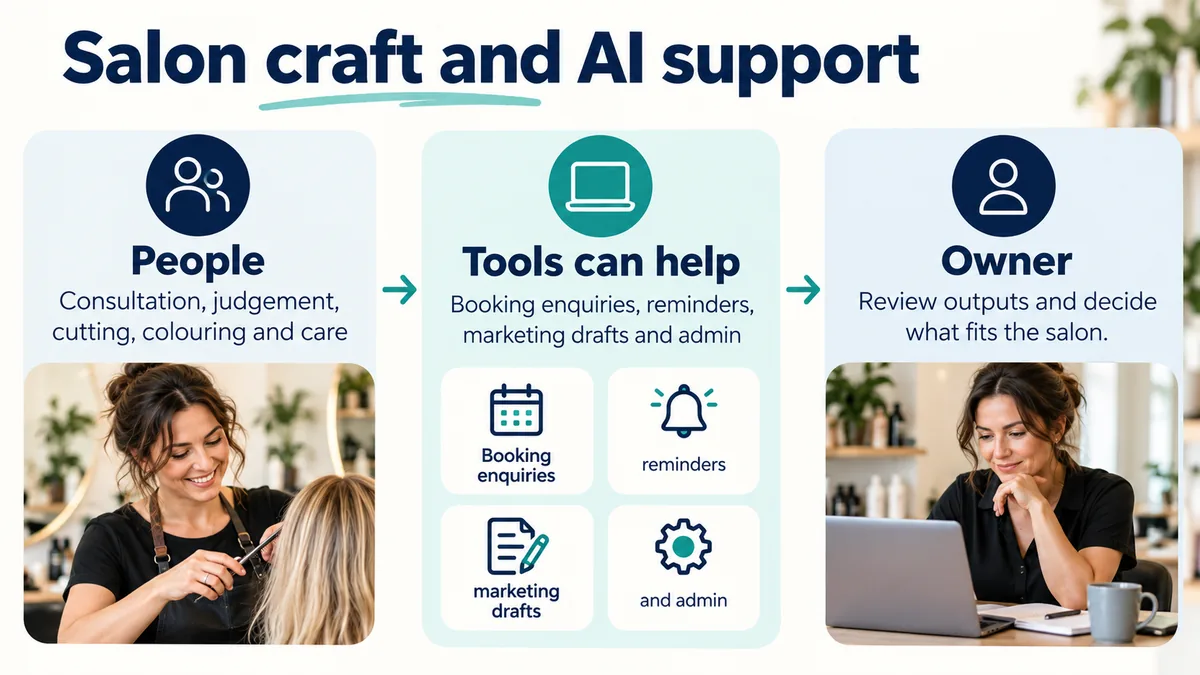
No, AI is not coming for the scissors. Nobody has built a machine that can read a client's hair texture, talk them out of a fringe they'll regret, and deliver a balayage that photographs well, and nothing on the horizon suggests that's changing soon. Australia's own Productivity Commission put a number on this in April 2026: across the whole economy, only around 4% of jobs can be fully or mostly automated by current AI, with a further 30%-plus augmented rather than replaced. Hands-on personal services like hairdressing sit firmly in the "augmented, not automated" camp.
What is changing is everything around the chair, who answers the phone when you're mid-foil, who chases the no-show, who writes the Instagram caption, and who gets found first when someone searches "balayage near me" at 9pm. That's the part of the business AI is already quietly taking over in salons that use it well, and ignoring it is now a competitive disadvantage, not a neutral choice.
TL;DR
- The Productivity Commission found only ~4% of Australian jobs are fully or mostly automatable by current AI, hands-on trades like hairdressing aren't in that group.
- AI can already answer missed calls, book and reschedule appointments, chase no-shows, request reviews, and draft social content for a salon, tasks that eat hours a week but don't need a trained stylist's hands.
- Around 45% of salon clients say they're still uncomfortable talking to an AI on the phone, meaning human escalation isn't optional, it's part of the design.
- AI tools for salons are priced for small business, not enterprise, Australian AI-powered front-desk tools typically run in the hundreds, not thousands, of dollars a month.
- The real risk to a salon isn't AI taking the job, it's a competitor salon using AI to answer every call and chase every review while yours misses both.
- Average hairdresser earnings in Australia sit around $70,450/year (Indeed, 1,300+ salaries, September 2026), a figure that reflects steady demand for the craft itself, not a shrinking trade.
Why Can't AI Actually Cut, Colour, or Style Hair?
Cutting and colouring hair is a physical, judgement-heavy craft performed on a living, moving, non-standard surface, every head is a different shape, every client has a different pain tolerance for change, and a huge part of the job is reading a person's face in the mirror and adjusting on the fly. Robotics research has made real progress on dextrous manipulation tasks, but nothing commercially available can safely hold scissors or a colour brush against a client's scalp, let alone make the hundreds of small aesthetic judgement calls a stylist makes in a single appointment.
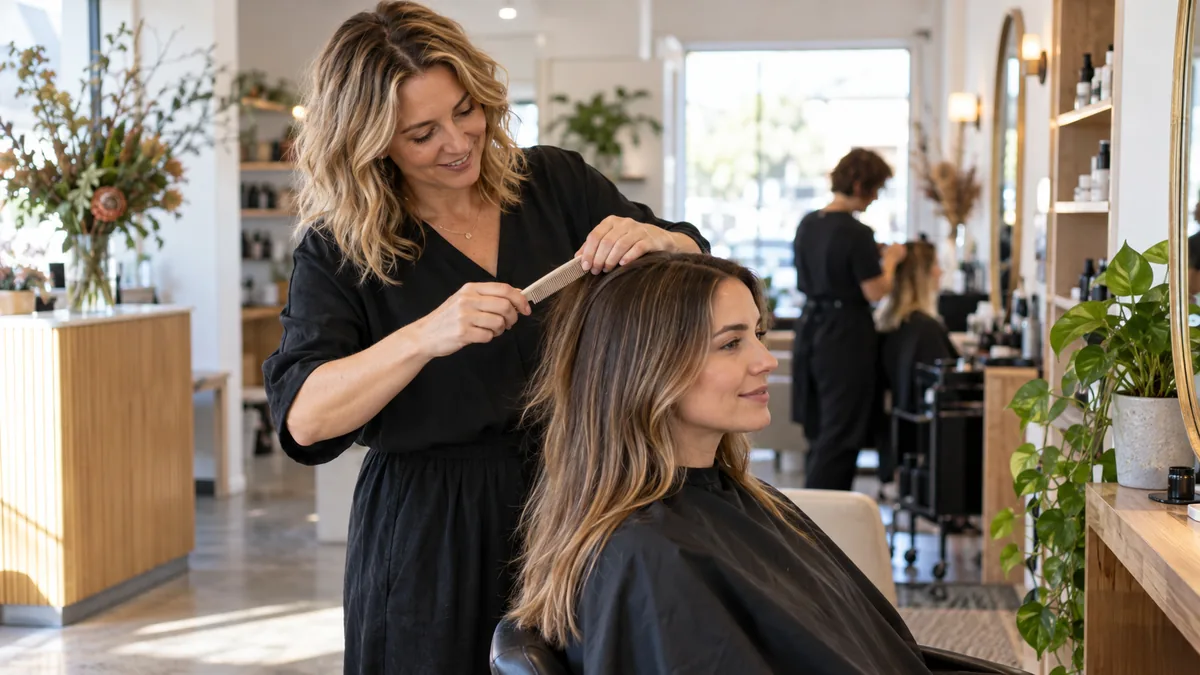
There's also a trust and liability dimension that AI boosters tend to skip over. A bad automated recommendation is an inconvenience; a bad automated haircut or chemical process is a potential injury, and no salon owner's insurance is written with an "AI did it" clause. That's before you get to the relationship itself, a huge share of repeat salon business is built on the stylist knowing the client, remembering what happened last time they tried fringe, and having an actual conversation during the appointment. That's not a feature AI companies are racing to replicate, because it isn't a problem AI solves.
So when the question is "will AI replace the stylist," the honest answer is a clean no. The more useful question, the one that actually affects a salon's bottom line in 2026, is what AI is already doing to the business around the stylist.
What Parts of Running a Salon Can AI Already Do?
Plenty, and most of it is the admin and marketing work salon owners already hate doing. The categories worth knowing about:
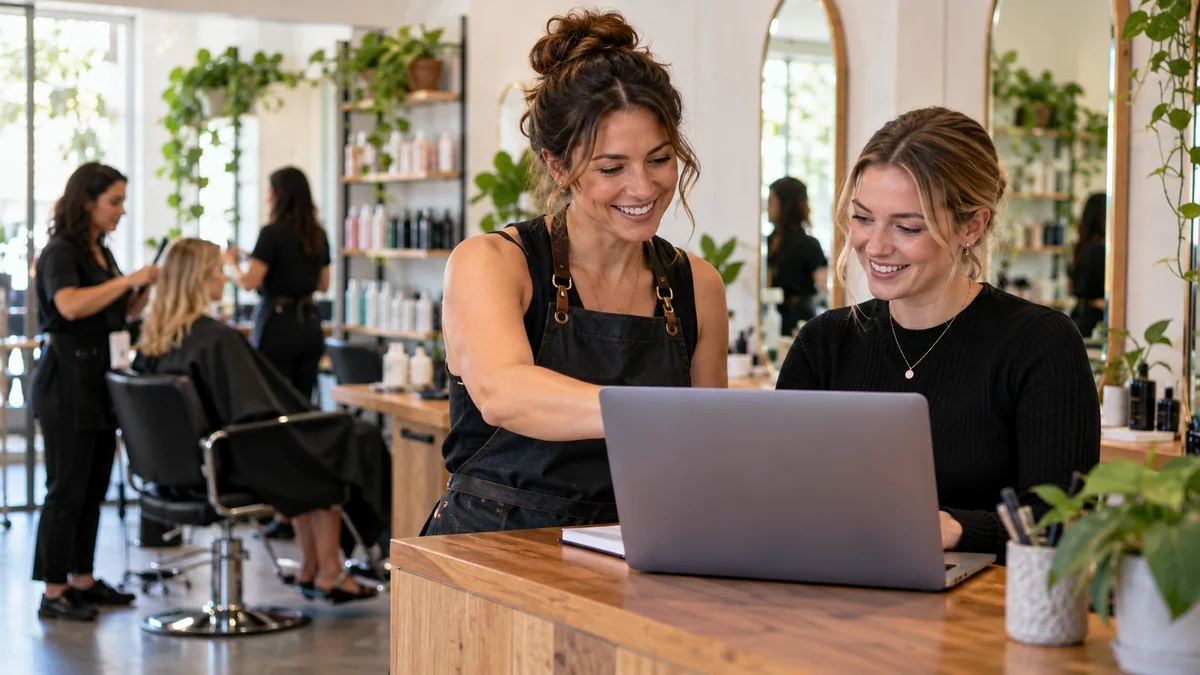
Answering the phone when you can't. AI phone/receptionist tools now hold a natural voice conversation with a caller, check live availability, and book or reschedule an appointment without a human picking up, built specifically to cover the gap when every chair is full and the phone is ringing anyway. Industry comparisons published in April 2026 note that around 45% of salon clients still say they're uncomfortable talking to an AI rather than a person, which is exactly why these tools are built to escalate to a human for complaints, medical questions, or complex colour-correction consultations rather than trying to handle everything themselves.
Chasing the no-show and the empty chair. Automated SMS/email reminders and rebooking sequences are now standard features in salon booking platforms, not an add-on, nudging a client before their appointment and automatically following up afterwards to get the next booking in the diary, rather than relying on a receptionist remembering to call.
Asking for the review. A happy client who leaves without being asked for a Google review is a missed opportunity that compounds, reviews are one of the strongest local-search ranking signals a salon has, and automated review requests sent right after an appointment convert far better than a generic ask weeks later. (If this is new territory, how Australian small businesses can get more Google reviews without breaking the rules covers the compliance side the ACCC actually cares about.)
Drafting (not posting blind) the social content. Salons live and die by Instagram and TikTok in a way few other local service businesses do, the work is visual, and clients genuinely shop by scrolling. AI tools can draft captions, suggest posting times, and repurpose one photoshoot into a week of content, but the judgement call on what actually represents the salon's standard still needs a human eye before anything goes live.
Following up automatically between visits. Nurture sequences, a client who hasn't rebooked in 10 weeks gets a gentle "time for a trim?" message, a colour client gets a root-touch-up reminder timed to their actual cycle, used to require someone manually tracking a spreadsheet. Automated sequences now do this in the background. (See what marketing automation and nurture sequences actually look like for a small business if the concept is unfamiliar.)
None of this replaces a stylist. All of it replaces hours of unpaid-feeling admin that salon owners currently do themselves, badly, late at night, instead of spending that time on the chair or at home.
How Many Salon Jobs Are Actually at Risk From AI?
Not many, and the data backs that up from two directions. On the macro side, the Productivity Commission's own April 2026 analysis found roughly 4% of Australian jobs economy-wide are fully or mostly automatable with current AI, a "reasonably small share," in Commission Chair Danielle Wood's own words, with a larger 30%-plus share augmented rather than replaced. Hands-on personal services sit in that augmented bucket: the technology changes how the job is supported, not whether the job exists.
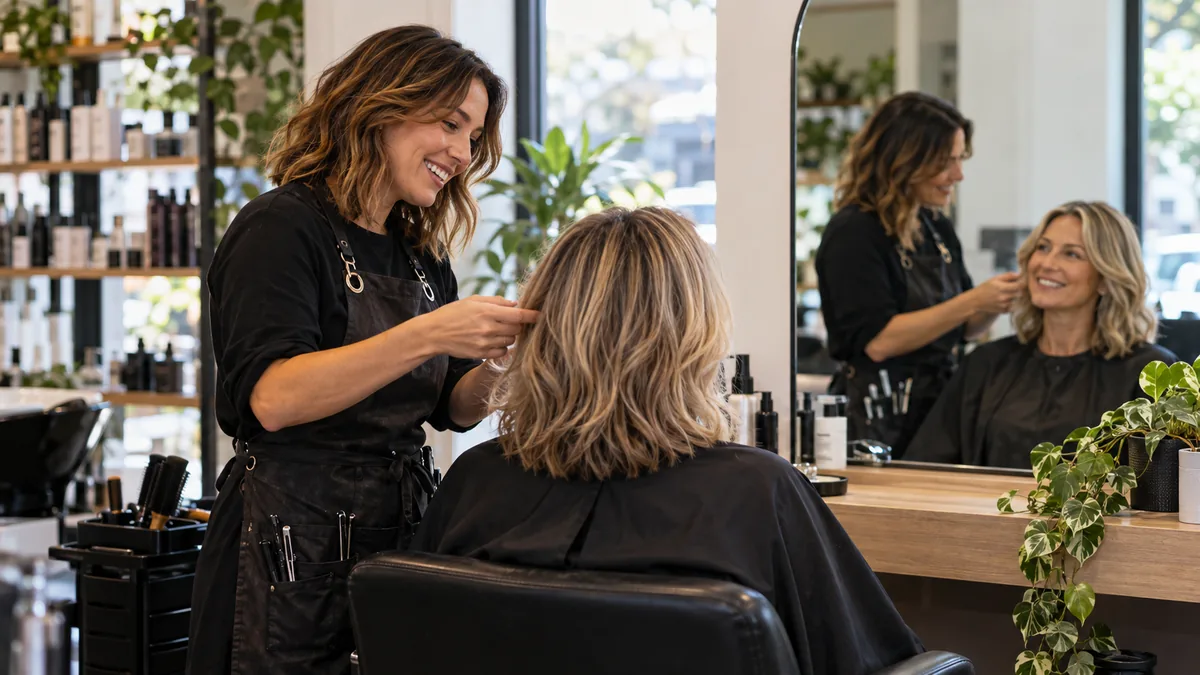
On the demand side, Indeed Australia's salary data (1,300-plus salaries, last updated 28 September 2026) puts average hairdresser earnings at $70,450 a year, with a typical range of $54,170 to $91,623 depending on experience and location. That's not the earnings profile of a trade being quietly automated out of existence, it's a trade with steady, ongoing demand for a skill AI genuinely can't replicate.
The actual risk isn't a stylist losing their chair to a robot. It's a salon owner losing bookings to the salon down the road that answers every call, follows up every client, and shows up first in local search, because that competitor adopted the admin-and-marketing layer of AI eighteen months earlier. (If "how do I even get found first" sounds familiar, how customers find local businesses now, Google Search, Maps, reviews and AI is the deeper dive on that specific problem.)
Is It Actually Worth Paying for AI Tools as a Small Salon?
Run the numbers the way you'd run any other business decision, not as a tech trend you feel pressure to join. A missed call during a busy Saturday isn't a non-event, it's a lost booking, and for a salon charging $80, $200+ for a cut-and-colour, a handful of missed calls a week adds up to real revenue walking to a competitor who happened to pick up. Industry comparisons of AI phone tools published in April 2026 note that a human receptionist typically costs a business in the order of $3,000+ a month, while AI-assisted front-desk tools designed for small service businesses are commonly priced in the hundreds, not thousands, not a replacement for a receptionist in a large, multi-chair salon, but a genuine option for the single-owner or small-team salon that currently has nobody answering the phone at all during a service.
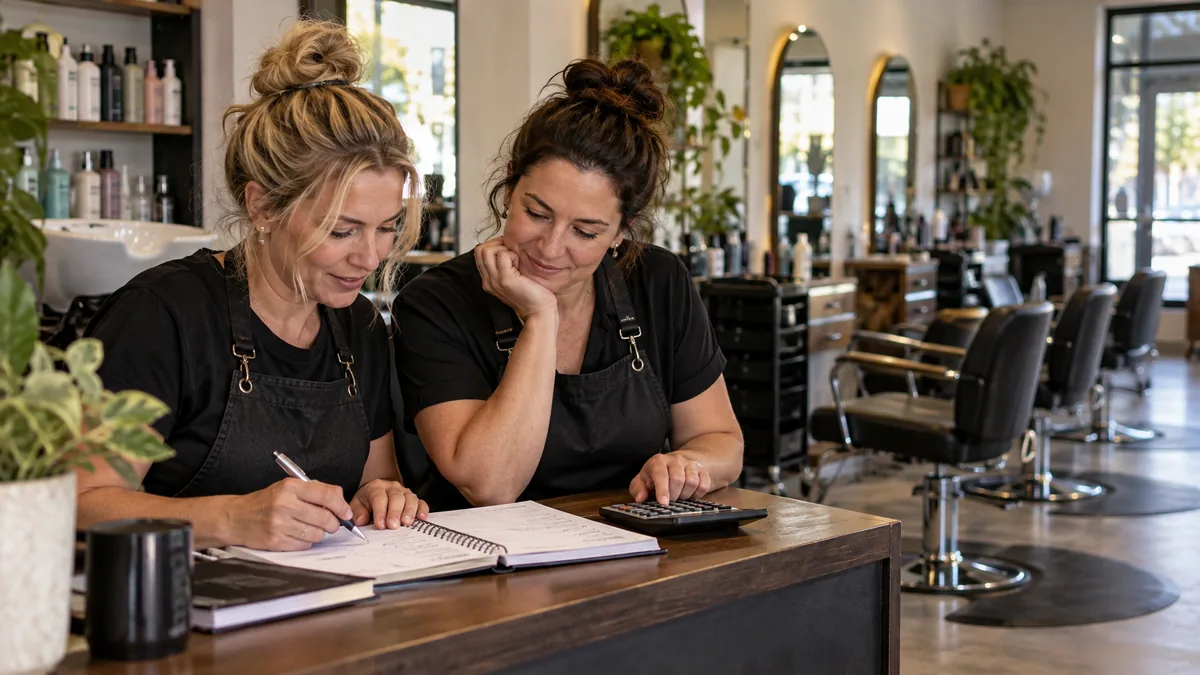
The honest trade-off: AI front-desk and follow-up tools are worth it specifically because they cover the gap when there's no spare pair of hands, not because they're "better" than a person. If a salon already has someone at the desk full-time, the better first investment is usually automating the follow-up and review-request side rather than the phone. If nobody's answering the phone between 9am and 6pm because every chair is occupied, that's the gap worth closing first.
OZ Media's own AI-powered tools for local service businesses, missed-call text-back, automated follow-up, review requests, and a 24/7 chatbot, bundled into one unified inbox, are built for exactly this kind of gap, not to replace staff. Pricing runs across three tiers depending on how much a business needs automated (last independently confirmed September 2026, worth a direct check before you commit, since prices do move). The honest first step for most salons isn't buying a tool, it's figuring out which specific gap (missed calls, no-shows, reviews, or rebooking) is actually costing the most revenue right now, then solving that one gap before adding anything else. (For context on what "an AI employee" actually costs across different setups in Australia, see what does an AI employee actually cost, a 2026 Australian pricing guide.)
Frequently Asked Questions
Will AI ever be able to cut or colour hair without a person?
Not with any technology available or seriously forecast for the near future. Haircutting and colouring require fine motor control on a non-standard, moving surface plus constant aesthetic and safety judgement calls, a combination current robotics and AI are nowhere close to handling safely or well.
What's the single easiest AI tool for a small salon to start with?
Automated review requests sent immediately after an appointment, and automated appointment reminders/rebooking prompts, both are low-risk, don't touch client-facing conversation quality, and directly protect revenue that's currently leaking through no-shows and unclaimed reviews.
Do clients actually mind talking to an AI receptionist?
A meaningful share do, around 45% of salon clients report discomfort talking to AI rather than a person, based on April 2026 industry comparisons. That's precisely why well-built AI phone tools are designed to escalate to a human for complaints, medical questions, or complex consultations rather than trying to handle every call themselves.
Is hairdressing a dying career because of AI?
No. Australia's Productivity Commission found only around 4% of jobs economy-wide are fully or mostly automatable by current AI, and hands-on personal-service trades like hairdressing aren't in that group. Indeed Australia's salary data (1,300+ salaries, current as of September 2026) shows steady average earnings of $70,450/year, consistent with ongoing demand rather than a shrinking trade.
Should a salon post on social media manually or use AI to help?
A hybrid approach works best for most salons: use AI to draft captions, suggest posting cadence, and repurpose photoshoot content faster, but keep a human reviewing everything before it posts, the visual standard a salon is judged on is exactly the part AI drafting tools can't be trusted to get right unsupervised.
Can a salon get in trouble for using AI without telling clients?
Businesses should be upfront that automated systems (phone bots, chatbots, automated review requests) are being used where a client might reasonably assume they're talking to a person, the ACCC's general position on misleading conduct under the Australian Consumer Law applies to automated interactions the same way it applies to anything else a business represents to a customer. When in doubt, disclose.
If you're running a salon and the phone goes unanswered every time you're mid-service, or you know reviews are slipping through the cracks, that's a specific, fixable gap, not a reason to overhaul the whole business. OZ Media's AI-powered tools for local service businesses are built for exactly that kind of gap: missed-call text-back, automated follow-up, and review requests that don't need a stylist's hands to run. If you want visual content for Instagram handled properly rather than bolted on, our social media management is built for businesses that sell on how the work looks. Either way, the fastest way to find out what actually makes sense for your salon is a conversation, not a sales pitch, book a free 30-minute strategy session and we'll tell you honestly whether AI tools are worth it for your specific setup, or whether your money's better spent elsewhere.
Sources and References
- Productivity Commission (Australia), AI jobs impact findings, April 2026, as reported with direct quotes from Chair Danielle Wood: "Productivity Commission wrong on AI jobs impact", MacroBusiness, accessed 2026-10-05. (Secondary citation, the Commission's own site was not independently fetched this run; flagged in Publishing Notes.)
- Indeed Australia, "Hair Stylist Salaries in Australia", 1,300+ salaries, last updated 28 September 2026.
- CloudTalk, "Best AI Receptionist for Salons & Spas: 9 Tools Tested", published 10 April 2026, client-discomfort statistic (~45%), receptionist cost comparison, feature/limitation breakdown.
- World Economic Forum, Future of Jobs Report 2025, Jobs Outlook chapter, care-sector job growth context.
- Australian Competition and Consumer Commission (ACCC), general guidance on misleading conduct under the Australian Consumer Law, applied here to disclosure of automated/AI customer interactions.
- Prior OZ Media articles cited for context: What Does an AI Employee Actually Cost? A 2026 Australian Pricing Guide; How Can Australian Small Businesses Get More Google Reviews in 2026 Without Breaking the Rules?; What Is Marketing Automation and Does Your Small Business Actually Need Nurture Sequences in 2026?; How Customers Find Local Businesses Now: Google Search, Maps, Reviews and AI.
Sources that failed to fetch independently this run and were therefore not cited as freshly verified: `jobsandskills.gov.au` (Hairdressers occupation profile, `ROBOTS_DISALLOWED`), `joboutlook.gov.au` (DNS/robots failure), Statista's Australian hairdresser headcount page (premium paywall, figures redacted), IBISWorld's Hairdressing & Beauty Services industry page (405 error). None of these were substituted with guessed figures.