
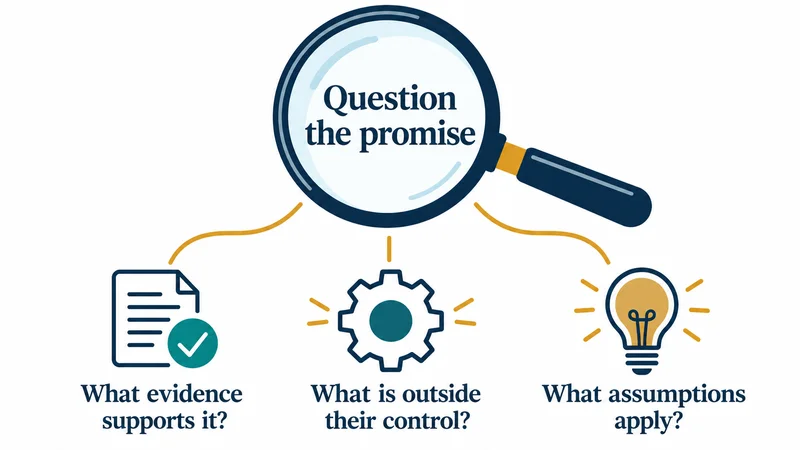
The clearest warning signs before hiring a marketing agency are guaranteed results, no written scope of work, no access to your own ad and analytics accounts, long lock-in contracts with no exit clause, and a senior pitch team that disappears after you sign. Any one of these on its own is worth a direct conversation. Two or more together is a reason to keep looking.
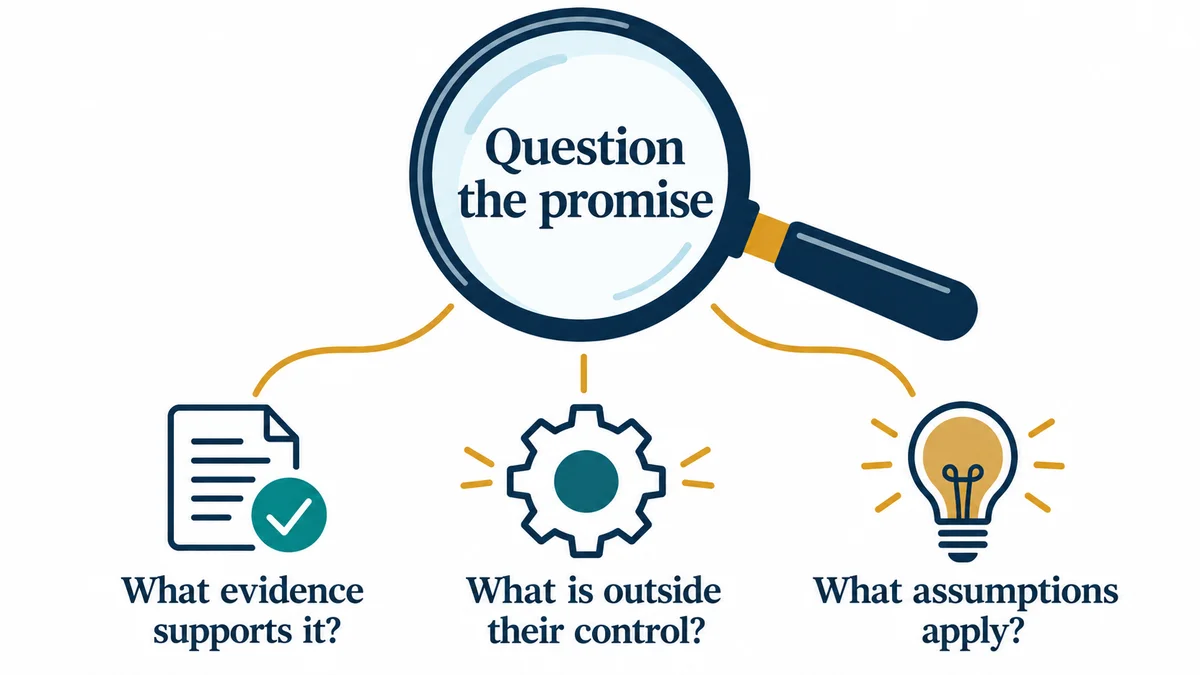
TL;DR, the 10 red flags:
- Guaranteed rankings, guaranteed leads, or a guaranteed return on ad spend. Nobody controls Google, Meta or the market, and Australian Consumer Law treats an unsubstantiated promise as a legal problem, not just a sales exaggeration.
- No written scope of work. If you cannot point to a document listing exactly what is being delivered, you have no way to tell a quiet month from work that is not being done.
- You do not get admin access to your own accounts. Google Ads, Analytics, Google Business Profile, your domain and your social pages should sit in accounts you own, not the agency's.
- Long contracts with no clear exit clause. A 12-month lock-in with no defined handover terms is a very different proposition to a 12-month contract with a 30-day exit and a documented handover process.
- A senior pitch, then a junior delivery team. The person who sold you is not the person doing the work, and you were never told that would happen.
- Vague, infrequent, or metrics-without-context reporting. A screenshot of rising numbers with no explanation of why, or what is planned next, is not reporting.
- No real case studies or client references. "We cannot share that, confidentiality" is sometimes true and sometimes a dodge. A legitimate agency can produce at least one of the two.
- A proposal that reads like it was written for anyone. If the industry name could be swapped out with no other changes, it was not actually built for your business.
- Pressure to sign today, or a deal that vanishes if you do not. Real agencies do not need urgency tactics to win honest work.
- Slow, vague or evasive communication during the sales process itself. How an agency behaves before you are a paying client is the best preview you will get of how they will behave after.
Why Does a Guaranteed Result Matter So Much?
Because nobody, not OZ Media and not any other agency, controls Google's algorithm, Meta's ad auction, or how your market responds to a campaign. A guaranteed ranking, a guaranteed number of leads, or a guaranteed return on ad spend is either dishonest or built on tactics that put your account or your site at genuine risk.
This is not just a sales-ethics issue, it is a legal one. The Australian Competition and Consumer Commission's guidance on false or misleading claims is explicit: any claim a business makes about its products or services must be accurate and based on reasonable grounds, and it makes no difference whether the business intended to mislead or not. The test is whether the claim is likely to mislead, not whether anyone meant it to.1 An agency promising a specific, un-hedged outcome is making exactly the kind of claim that guidance targets. If they cannot show you the reasonable grounds behind the number, do not accept the number.
Why Does It Matter if There's No Written Scope of Work?

Because without one, you have no way to tell the difference between a quiet month and a month where nothing actually happened. A proper scope of work names the specific deliverables (how many pieces of content, which campaigns, what cadence of optimisation), not just a dollar figure and a vague description like "ongoing SEO" or "social media management." If a proposal cannot tell you what you are actually buying in concrete terms, you are not buying a service, you are buying a retainer with no accountability attached to it.
Ask directly: what, specifically, happens in month one, month three, and month six? A real agency has an answer ready. A vague one improvises.
Why Does Account Ownership Matter This Much?
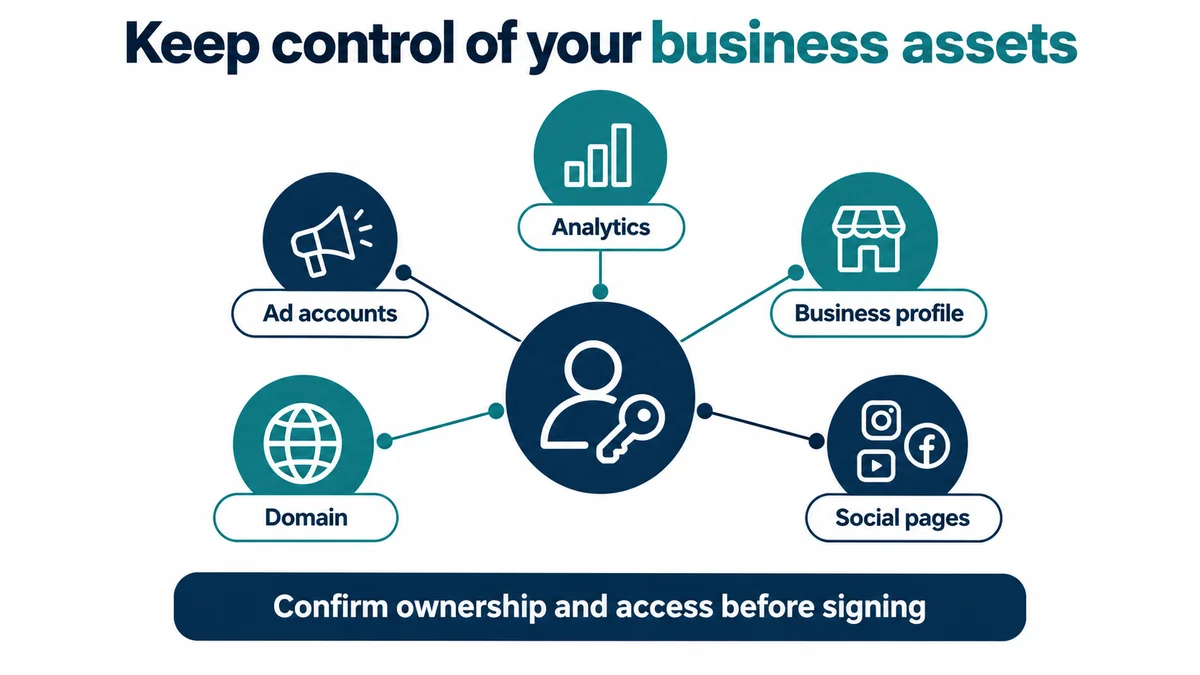
Because your Google Ads account, Google Analytics property, Google Business Profile, domain registration and social media pages are business assets, not agency property, and who holds admin access to them determines how much leverage you have if the relationship ends badly. If an agency builds these accounts under their own login and will not add you as an owner or admin, you do not actually control your own marketing infrastructure, they do. Switching providers later can mean starting from zero: lost ad history, lost conversion data, lost reviews, sometimes a lost domain.
Ask for admin-level access to every account from day one, in writing, as a condition of signing. A legitimate agency expects this question and has a standard answer. One that hesitates is telling you something.
Your Google Ads account, Google Analytics property, Google Business Profile, domain registration and social media pages are business assets, not agency property.
What Should a Reasonable Contract Length and Exit Clause Actually Look Like?
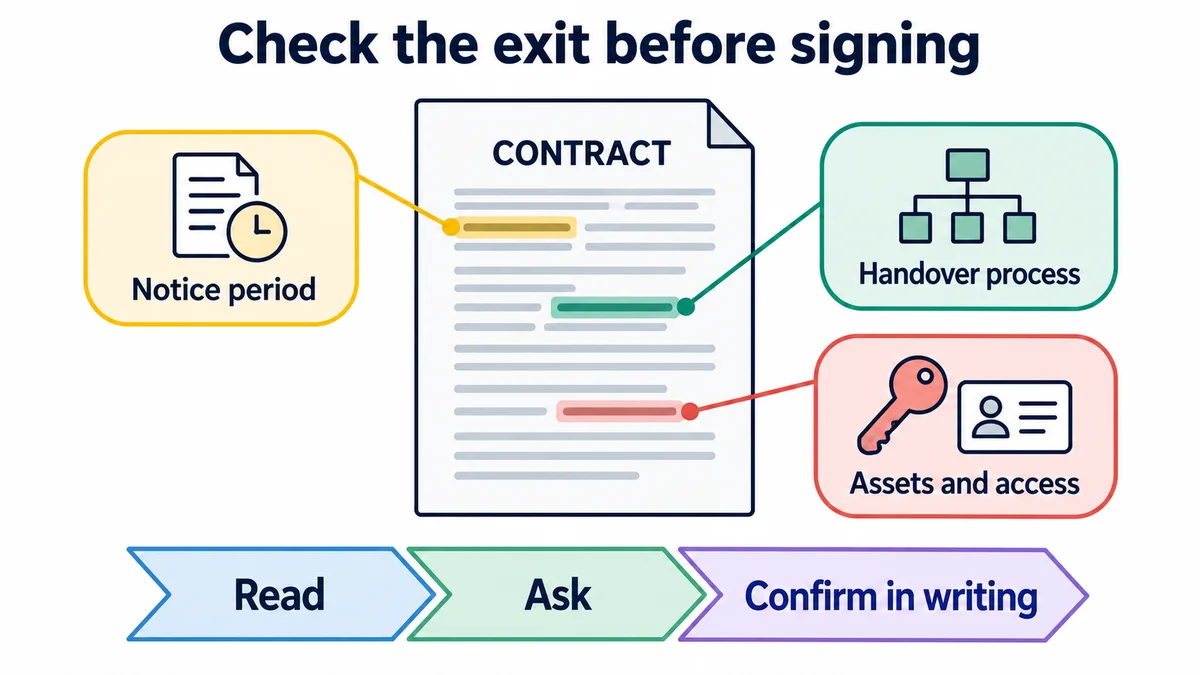
Lock-in contracts themselves are not automatically a red flag. They are common and generally lawful in Australia provided they comply with the Australian Consumer Law. What matters is whether the exit terms are clearly defined: a reasonable notice period (commonly 30 to 60 days), a documented handover process covering account access and creative assets, and no silent auto-renewal that locks you in again without you actively agreeing to it.
Since 9 November 2023, unfair contract terms in standard form small business contracts have been unlawful under the Australian Consumer Law, not just discouraged, with penalties enforced by the ACCC and state and territory fair trading agencies that scale with the size of the business involved. A term that gives the agency broad exit rights while locking you into heavy fees or an undefined notice period is exactly the kind of imbalance that regime was built to catch. If a contract's exit terms are vague, ask the agency to put specifics in writing before you sign, not after a dispute starts.
What Does "Senior Pitch, Junior Delivery" Actually Look Like in Practice?

It looks like this: the founder or a senior strategist runs your pitch meeting, impresses you with sharp insight into your industry, and then your actual day-to-day contact after signing is someone several levels more junior who was not in that meeting and does not have the same depth of experience. This is not automatically dishonest, agencies do legitimately structure teams with senior oversight and junior execution, but it becomes a red flag when it is not disclosed upfront and the pricing was set based on the seniority you met in the pitch.
Ask directly in the pitch: who, by name, will actually be working on my account day-to-day, and how often will the senior person you are talking to now actually be involved? Get the answer in writing if the response is vague.
What Should You Actually Expect From Reporting?
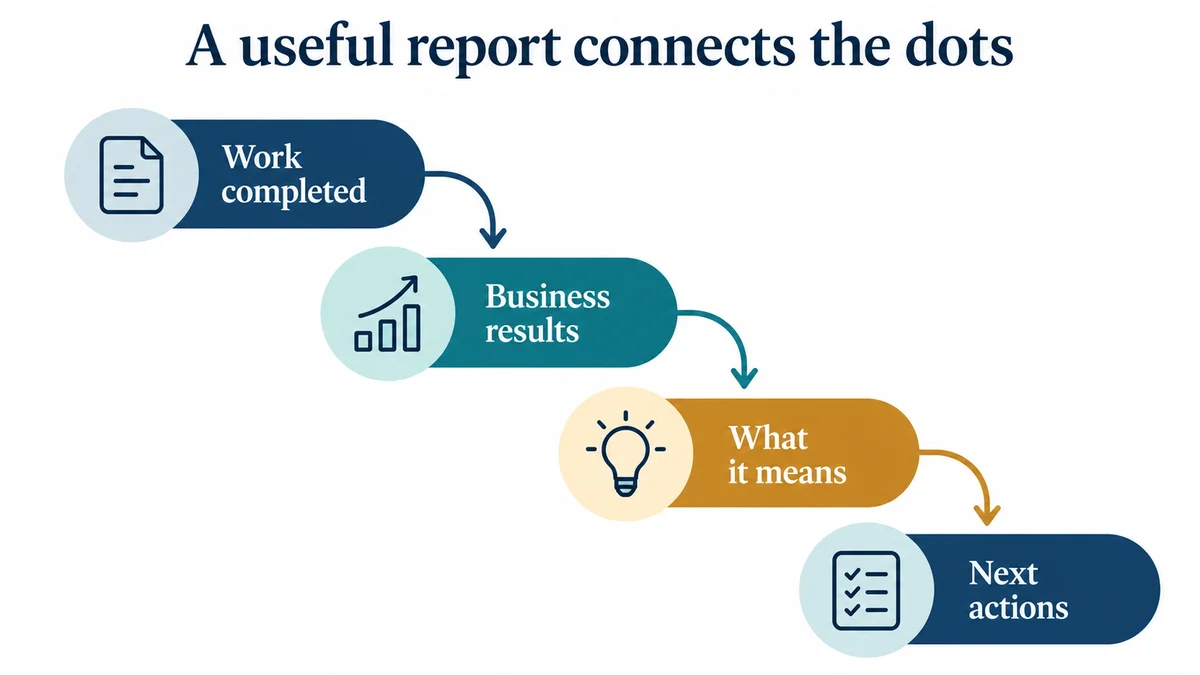
Reporting that connects activity to business outcomes, not a vanity-metric scoreboard. A rising "reach" number or an "engagement" percentage with no explanation of what drove it, what is planned next, or how it relates to actual enquiries and sales is not a report, it is a screenshot. Reasonable reporting ties specific actions taken that month to specific results, and names what is planned for the next one.
If a monthly report raises more questions than it answers, and the agency cannot walk you through it in a conversation without reaching for jargon, that is worth noting. Our own breakdown of what actually separates cheap SEO from quality SEO covers this same principle for the SEO-specific version of the question.
Should You Be Worried if an Agency Won't Share Case Studies or References?

Be cautious, not automatically alarmed. Some agencies genuinely operate under client confidentiality agreements that prevent naming specific results publicly, and that is a legitimate constraint, not a dodge, in some industries. But a legitimate agency can usually produce at least one of two things: a real case study (even an anonymised one, with real numbers) or a client reference you can actually speak to. An agency that cannot produce either, and gets defensive rather than explanatory when you ask, is a different situation entirely.
If you are specifically vetting an SEO engagement, we have written a deeper breakdown of exactly this question, including the real cost bands behind it, in is paying for an SEO agency worth it: the real numbers.
How Do You Tell a Genuinely Tailored Proposal From a Templated One?

Read it as if you were a different business entirely. If a proposal for your hardware store could be handed to a dental practice with only the business name changed and nothing else, it was not built for you, it is a template with a find-and-replace pass over it. A proposal built specifically for your business names your actual competitors, references your actual current state (your existing rankings, your existing ad account's history, your existing reviews), and explains why the recommended approach fits your specific situation rather than reciting a generic list of services.
This is one of the clearest, fastest tests available to you before signing anything: ask what is specific about this proposal to my business, and see how concrete the answer is.
Why Is a Time-Limited "Sign Today" Offer a Warning Sign?

Because urgency tactics are a sales technique, not a business reality. There is no genuine operational reason a marketing retainer needs to be signed within 24 or 48 hours to be valid, and a "this price disappears tomorrow" framing exists to short-circuit the comparison shopping and reference-checking you would otherwise do. A confident agency with a genuinely good offer does not need you to decide before you have had time to think.
If you feel rushed, that alone is worth pausing for. Ask for 48 hours and watch how the agency responds, graciously or with renewed pressure.
What Does the Sales Process Itself Tell You About What Comes After?

More than most buyers realise. How an agency communicates before you are a paying client, response times, clarity of answers, whether they actually listen to your specific situation or recite a standard pitch, is close to the best preview available of how they will communicate once you are locked into a contract. An agency that is slow, vague, or evasive during the courtship phase, when they are actively trying to win your business, is unlikely to suddenly become sharper and more responsive once the contract is signed and the monthly fee is already committed.
Pay attention to this as a genuine signal, not a minor inconvenience. It is data, not an unrelated first impression.
What Should You Do if You Spot One of These Red Flags?
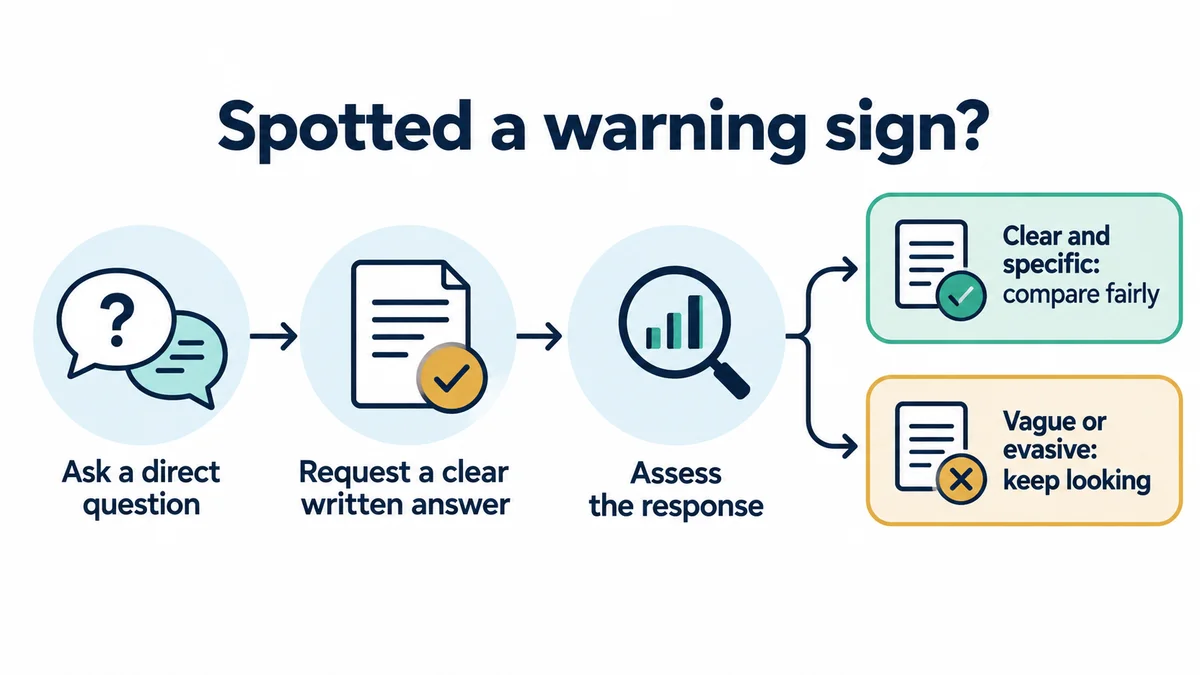
Not necessarily walk away immediately, ask directly. Most of these flags are worth raising as a direct question before you write anyone off: "can you put the exit terms in writing," "who specifically will be working on my account," "can I get admin access to my own Google Ads account from day one." A legitimate agency answers these clearly and promptly. One that gets defensive, vague, or evasive in response to a reasonable question has just told you something more useful than the original pitch did.
If you are weighing up whether to hire an agency at all versus doing it yourself, our broader guides on what you should ask before hiring a web designer and what to look for when hiring a social media manager cover the same vetting principle for those two specific roles in more detail.
We would rather lose a prospective client to a direct, specific question than win one who signed without asking it. Every engagement at OZ Media Digital starts with a written scope, admin access to your own accounts handed over as a matter of course rather than something you have to request, and reporting that ties back to actual enquiries, not just traffic. If you are currently vetting agencies and want a second, no-pressure opinion on a proposal you have already received, our full range of marketing services is built around exactly the transparency this article describes. Book a free session and we will give you a straight answer, including if that answer is that your current agency is actually doing fine.
FAQ
How many of these red flags are too many to ignore?
Any single flag is worth a direct conversation before you dismiss it, since some have reasonable explanations. Two or more together, especially a guaranteed result combined with reluctance to share account access or contract terms in writing, is a genuine reason to keep looking elsewhere.
Is a 12-month contract always a bad sign?
No. Longer contracts are common and lawful in Australia, and can reflect the genuine time SEO and content work takes to compound. What matters is whether the exit terms, handover process and notice period are clearly defined in writing, not the length of the term itself.
Should I always ask for admin access to my own accounts?
Yes, as a condition of signing, not an afterthought once something has gone wrong. This applies to Google Ads, Google Analytics, Google Business Profile, your domain registrar and your social media pages.
What if the agency says case studies are confidential?
That can be a legitimate constraint in some industries, but ask for at least one of two things: an anonymised case study with real numbers, or a current client reference you can actually contact. An agency with neither available is a different situation to one with a genuine confidentiality agreement.
Does a guaranteed ranking or guaranteed leads ever make sense to accept?
No. No agency controls Google's algorithm, Meta's ad auction or how a market responds, and the Australian Competition and Consumer Commission's own guidance treats an unsubstantiated performance claim as a compliance issue, not just an aggressive sales tactic.
What's the fastest way to pressure-test a proposal before signing?
Ask what is specifically built for your business in it, by name, and see how concrete the answer is. A proposal that could be handed to a completely different industry with only the business name changed was not built for you.