 OZ Media Digital

Zero-click search is when someone searches on Google and gets their answer directly on the results page, without clicking through to any website. In 2026, that's now the outcome of most Google searches, not a minority of them, and the shift has been accelerated hard by AI Overviews and AI Mode. For a small business, it doesn't mean SEO has stopped working. It means the old scorecard, rankings and clicks, no longer tells the whole story, and the businesses adapting fastest are the ones redefining what a "win" in search actually looks like.
If you've watched your organic traffic flatten or dip over the past year while your Google Search Console impressions and rankings look fine, this is very likely why. It's not a penalty. It's not something you broke. It's a structural change in how Google search results work, and it affects almost every business searching for information-heavy answers online.
TL;DR
- Roughly 58–65% of Google searches now end without a click to any website, a trend that predates AI but has sharply accelerated since AI Overviews rolled out widely.
- Google's own AI Overviews now appear on somewhere between roughly half of tracked queries generally and over 90% of certain commercial, service-based query types, based on independent tracking.
- Position-1 organic listings are losing a substantial share of their historical click-through rate when an AI Overview appears above them, but pages actually cited inside the AI Overview see meaningfully better click-through than uncited pages on the same results page.
- Google has stated plainly there are no special technical requirements to appear in AI Overviews, the same fundamentals that earn strong organic rankings are what earn AI citations too.
- Local, transactional and "near me" service queries behave differently to informational ones, a phone call, a direction request or a booking from the map pack still counts as a conversion, even with zero click to your website.
- The fix isn't abandoning SEO. It's tracking a wider set of visibility signals (impressions, brand search, calls, direction requests) alongside clicks, and structuring content so it's the thing AI systems and featured snippets actually quote.
What Is Zero-Click Search, Exactly?
A zero-click search is any Google search where the person gets what they needed straight from the results page, a featured snippet, a knowledge panel, a local map pack listing, a "People also ask" answer, or now, an AI Overview, and never clicks through to a website.
This isn't new. Featured snippets and knowledge panels have been eating a share of clicks since well before AI entered the picture. What's changed is the scale and the mechanism. AI Overviews synthesise information from multiple sources into a single paragraph-style answer that sits above the traditional blue links, and increasingly, Google's AI Mode replaces the results page altogether with a conversational answer. Both are designed to satisfy the query on the spot.
For a search like "what time does Bunnings close" or "how much does a hot water system cost to replace," Google can often answer the question directly, and most people take that answer and move on. They're not being rude to your website, they got what they came for.
How Big Is the Zero-Click Problem in 2026?
It's bigger than most small business owners realise, and it's still growing.
Zero-click measurement traces back to clickstream research by SparkToro and Datos, which found that around 58.5% of US Google searches and 59.7% of EU searches ended without a click to the open web, based on their most recent published clickstream data. That was before AI Overviews had reached anything like their current scale.
Since then, AI Overview prevalence itself has climbed sharply. BrightEdge's tracking showed AI Overviews appearing on 48% of tracked queries by February 2026, up from 31% a year earlier, a 17 percentage-point jump in twelve months. And the picture looks even starker for commercial, service-based search terms specifically: independent Australian tracking by Search Scope across childcare, allied health and SEO-services queries found AI Overviews present on 92% of the 53 Australian queries they monitored between July and August 2026 (worth noting as a ceiling estimate for high-commercial-intent categories, not a random sample of all searches, but directionally telling for exactly the kind of local service queries most OZ Media clients compete for).
The click-through hit is real too. Ahrefs' tracking found the position-1 organic listing losing 58% of its historical click-through rate when an AI Overview appears above it, up from a 34.5% loss measured in April 2025, meaning the erosion is accelerating, not stabilising. Pew Research separately found a roughly 47% relative drop in click rate on pages where an AI Overview was present (8% clicked versus 15% without one).
Here's the more useful half of the story, though: Seer Interactive's tracking found that organic CTR on AI-Overview-affected queries actually rebounded from 1.3% in December 2025 to 2.4% in February 2026 as Google tuned the feature, and, critically, pages that are cited as a source inside the AI Overview pull roughly 2.1% CTR versus around 0.9% for uncited pages appearing lower on the same results page.
Being the source Google quotes is now worth more than simply ranking well underneath the answer.
Does Zero-Click Search Mean SEO Is Dead?
No, and if anyone tells you otherwise, they're selling you something, usually a replacement service they'd like you to buy instead.
Google's own developer documentation is unambiguous on this point: "there are no additional requirements to appear in AI Overviews or AI Mode, nor other special optimizations necessary." To be eligible as a cited source, a page simply needs to be indexed, eligible to appear in regular search with a normal snippet, and meet Google's standard technical requirements. Google explicitly states you don't need special markup, "AI text files," or new machine-readable formats to be eligible, quality, people-first content, a good page experience, clear textual content, and accurate, up-to-date business information are what it comes down to.
In practice, that means the SEO fundamentals OZ Media has always pushed clients toward, clear structure, genuinely useful content, technical health, an accurate and active Google Business Profile, real expertise demonstrated on the page, are exactly what earns AI citations too. The target hasn't moved. What's changed is that ranking well is no longer the finish line; being the quoted, linked, or called source is.
It's also worth separating two different outcomes that get lumped together as "zero-click is bad." Losing a click on an informational query you were never going to convert from anyway (like "what does a bookkeeper do") barely dents your business. Losing visibility altogether on a query with real commercial intent (like "bookkeeper near me pricing") is the one worth fighting for, and that's the split the next section covers.
Which Businesses Are Hit Hardest — and Which Actually Benefit?
Zero-click search doesn't land evenly. It depends heavily on query type and business model.
Hit hardest: businesses that rely on informational blog traffic as their main lead-generation engine, general how-to content, broad educational articles, "what is X" style pages designed to capture top-of-funnel search volume and nurture readers toward a sale over time. If your content strategy is built entirely on answering questions Google can now answer itself, you're competing directly with the AI Overview for the same click.
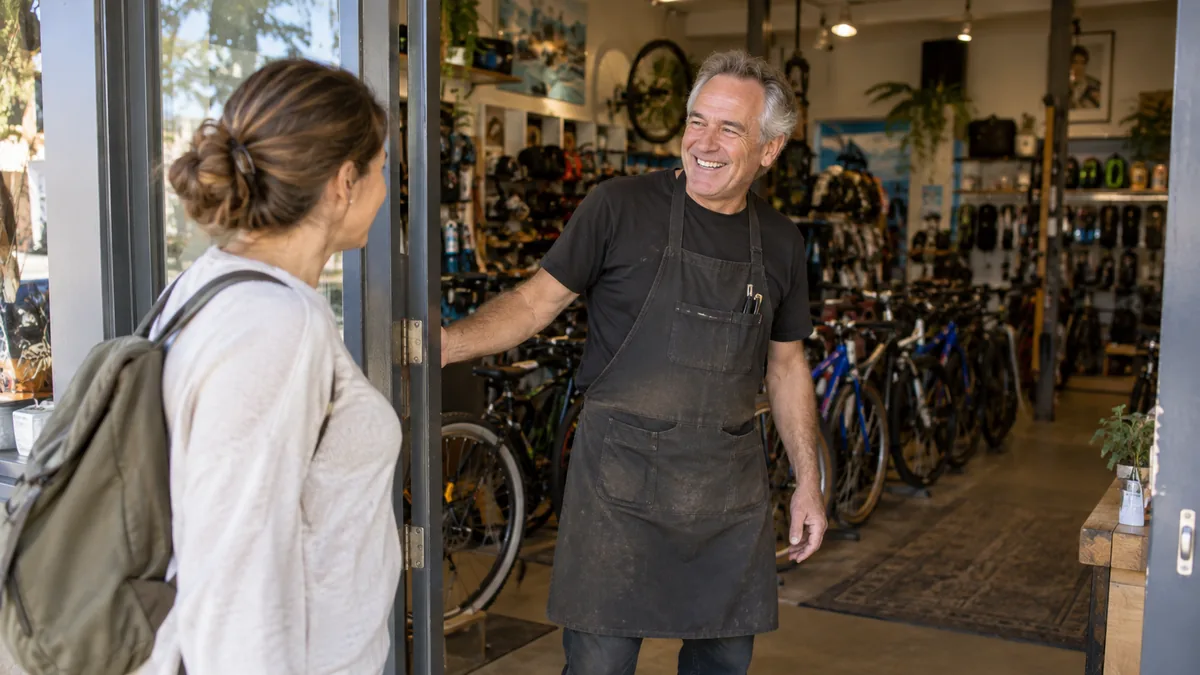
Less exposed, sometimes better off: local, service-based small businesses running on trades, health, property, finance, wellness and similar local-intent categories, precisely the OZ Media client base. Two reasons. First, a large share of local search intent resolves through the map pack, Google Business Profile calls, direction requests and "book now" actions rather than a website click at all, those are conversions Google Search Console won't show you as clicks, but they're conversions all the same. Second, high-intent transactional and comparison queries ("emergency plumber [suburb]," "best physio for lower back pain near me," "conveyancer fees [suburb]") are exactly the kind of specific, local, trust-dependent queries that AI systems are still cautious about answering definitively, they tend to surface a shortlist of options rather than pick a winner, which keeps genuine comparison shopping (and the click that comes with it) alive.
The practical read for most OZ Media clients: don't panic about zero-click search eroding your informational blog traffic if that traffic was never converting well anyway. Do pay close attention to whether your Google Business Profile, local pack presence and high-intent service pages are still pulling calls, direction requests and bookings, because that's where your actual revenue sits, and it's more resilient to this shift than generic content is.
What Should a Small Business Actually Do About Zero-Click Search?

A five-point action plan that's realistic for a small business to actually execute, not a 40-item technical checklist nobody gets through.
1. Make your Google Business Profile do more heavy lifting. With more commercial queries resolving in the map pack or an AI Overview pulling business details directly from your profile, an incomplete, outdated or poorly categorised GBP listing is now a bigger liability than a mediocre blog post. Keep hours, services, service areas, photos and posts current, and actively collect and respond to reviews, this is one of the highest-leverage, lowest-cost moves available and it directly feeds what AI systems surface for local queries.
2. Write to be quoted, not just to be read. Structure your highest-value pages so the key answer sits in a clear, direct sentence or two near the top, the same "front-loaded direct answer" structure that helps a page get pulled into a featured snippet or an AI Overview citation. Use genuine expertise, named specifics (prices, timeframes, your actual process) rather than vague marketing language, generic content has nothing distinctive for an AI system to quote, so it simply won't be quoted.
3. Shift keyword focus toward queries that still convert with a click. Comparison queries, pricing queries, "[service] vs [service]," booking and quote-request intent, and detailed local queries tend to still drive traffic because they require nuance, trust and a specific business relationship that a generic AI answer can't fully replace. Informational, broad, single-fact queries are the ones most likely to get fully absorbed by zero-click results, worth deprioritising if they've historically been your main content focus.
4. Track visibility, not just clicks. Pull up Google Search Console and look at impressions and average position for your key pages, not just clicks, a page holding strong impressions with a falling click count is a visibility signal, not a failure signal, and tells you the content is still being surfaced, just answered on-page more often. Pair that with Google Business Profile Insights for calls, direction requests and website clicks from your listing, and start tracking branded search volume over time.
5. Build genuine authority signals, not just page count. AI systems weigh trust and expertise signals, real author information, consistent NAP (name, address, phone) data across the web, backlinks from credible local and industry sources, and demonstrated first-hand experience, more heavily than sheer content volume. A handful of genuinely authoritative, specific pages will out-perform a large volume of generic content in an AI-mediated search landscape.
How Do You Measure Success When Fewer People Are Clicking?

This is the question that trips up most business owners, because the metrics you've always used (sessions, clicks, rankings) are now only part of the picture.
Widen the scorecard to include: Search Console impressions and average position trends (are you still being surfaced, even if the click rate on that surfacing has changed); Google Business Profile calls, direction requests, and website clicks from the listing itself (genuine conversions Search Console never counted as website "traffic" in the first place); branded search volume over time (a leading indicator that visibility, even zero-click visibility, is building recognition); and, most importantly, actual leads, quote requests, bookings and revenue, the metrics that matter regardless of which channel or click path delivered them.
If you're only measuring website sessions, you're measuring a shrinking slice of a bigger picture. The businesses navigating this well in 2026 are the ones who've stopped treating "did they click" as the only signal that search marketing is working.
Frequently Asked Questions
Is zero-click search the same thing as AI Overviews?
No. Zero-click search is the broader phenomenon, any search that ends without a click, including from featured snippets, knowledge panels and the local map pack, which predate AI Overviews by years. AI Overviews are one specific, fast-growing driver of zero-click outcomes, not the whole story.
Should I stop investing in SEO because of zero-click search?
No. Google's own documentation confirms the fundamentals that earn strong organic rankings are the same fundamentals that earn AI citations, there's no separate, special "AI SEO" checklist. Stopping SEO investment would mean losing visibility in both traditional results and AI-generated answers at the same time.
Does zero-click search affect local service businesses more or less than other businesses?
Generally less, for high-intent queries. Local, transactional searches (an emergency callout, a specific service near a suburb) tend to still drive a click, a call or a direction request because AI systems are cautious about picking a definitive local business recommendation outright. Broad informational content is more exposed.
How do I know if AI Overviews are affecting my website specifically?
Compare your Google Search Console impressions trend against your clicks trend for the same query set over the same period. Rising or flat impressions alongside falling clicks on informational queries is a strong signal that AI Overviews or featured snippets are increasingly answering those queries directly on the results page.
What's the single highest-leverage move for a small business right now?
Get your Google Business Profile genuinely complete, current and actively managed. It's the free asset most likely to appear directly inside AI-generated local answers, the map pack, and voice search results, and it's the one most small businesses under-invest in relative to how much visibility it now controls.
Can I track calls and direction requests the way I track website clicks?
Yes, Google Business Profile Insights reports calls, direction requests and website clicks generated directly from your listing, separately from anything Search Console or your website analytics will show you. If you're not checking that data regularly, you're likely under-counting how well your local search presence is actually performing.
If you want a clear-eyed look at where your own visibility stands under this shift, not just rankings, but the calls, direction requests and quote requests you might already be missing, that's exactly the audit our local SEO service is built around, and our AI marketing service covers the AI-citation side specifically for businesses wanting to actively show up inside AI Overviews and AI Mode answers.
For more on the bigger picture, have a look at Is SEO Still Worth It in the Age of AI Search? and How Customers Find Local Businesses Now. If you're rethinking how all of this fits into your broader lead-generation system, From Click to Customer walks through the full funnel, and Digital Marketing in 2026 is a good wider-lens companion read.
Want a second set of eyes on where your search visibility actually stands? Book a free strategy call and we'll show you exactly what's happening to your traffic, and what to do about it.
Sources and References
- SparkToro & Datos, clickstream research on zero-click search rates (cited in Zero-Click Search Statistics 2026, 5 April 2026)
- BrightEdge, AI Overviews prevalence tracking, February 2026 (cited in Australian Search Statistics 2026, Search Scope)
- Search Scope, independent Australian AI Overviews tracking across childcare, allied health and SEO-services queries, July–August 2026
- Ahrefs, position-1 organic CTR loss with AI Overviews present, tracked through December 2025
- Pew Research Center, click-rate comparison on pages with and without AI Overviews present
- Seer Interactive, organic CTR trend on AI-Overview-affected queries, December 2025–February 2026
- Google Search Central, AI Features and Your Website, accessed September 2026
- Google Search Help, Find information in faster & easier ways with AI Overviews, accessed September 2026