OZ Media Digital
The Neighbourhood Advantage You Can't Afford to Ignore
Think about the last time you needed a plumber fast. You probably grabbed your phone and typed something like "emergency plumber near me" or "blocked drain Balmain." You didn't search "plumber Australia" or even "plumber Sydney." You searched for someone within a few streets who could get to you that hour. That's the reality of local search, and it's the whole reason hyper local SEO exists.
Hyper local SEO is the practice of optimising your online presence so you get found by people searching within your specific neighbourhood, street, or suburb. It's different from standard local SEO, which might aim for a whole city like "plumber Sydney." Hyper local zooms in on the areas where your customers actually are. For a tradie on the North Shore, that might mean targeting searches for specific suburbs like Chatswood, North Sydney, or St Leonards.
This matters because nearly half of all Google searches have local intent, and a huge chunk of those result in a visit or purchase within 24 hours. Hyper local captures those high-intent, ready-to-buy customers who are already close by. They have an urgent need and they're actively looking for someone they can trust. If they can't find your business, they'll call your competitor who ranks one spot higher.
For Australian service providers, getting this right is becoming more important as Google tightens its rules around local service areas. The old trick of listing a Sydney address and claiming you serve everywhere doesn't cut it anymore. Google now expects genuine local relevance and consistent signals that prove you're actually present in the suburbs you target. That's where a strategy like the one OZ Media Digital builds for its clients comes in, combining a fully optimised Google Business Profile, neighbourhood-specific landing pages, and consistent citations to show search engines you belong in that area.
A broad SEO strategy can get you noticed across a city. Hyper local SEO gets you the phone call from the person whose tap burst ten minutes ago. That's the advantage you can't afford to leave on the table.
Hyper Local SEO Explained for Aussie Businesses

Search engines evaluate three core signals when deciding which businesses appear in map packs and neighbourhood searches. Proximity is how physically close your business is to the searcher at the moment they search. Relevance is how well your business profile and website match what the searcher is looking for. Prominence is your business's overall authority: review volume and quality, consistent business information across online directories, links from local websites, and the depth of your on-site content.
The businesses that gain most from a hyper local approach are those where urgency or proximity drives the decision: cafés, tradies, urgent care clinics, hair salons, bottle shops, and local retailers. For a tradie, a well-optimised Google Business Profile that mentions specific suburbs can mean the difference between picking up a job in the next street and losing it to a competitor who shows up first in the map pack.
Take the plumbing example: a generic "Services" page with every suburb forced into one paragraph rarely works. A dedicated page like "Emergency Plumber Newtown: Fast Response for [Business Name]" with the suburb name in the page heading, meta title, first paragraph, your business name, address, and phone number in the text, an embedded Google Map, and local customer reviews that mention Newtown sends Google a clear relevance signal. For a café in Chatswood, a similar approach with suburb-specific content about the local neighbourhood can double foot traffic.
Proximity. How close your business is to the searcher. You cannot move your shopfront, but you can make sure your address data is precise and consistent everywhere it appears online.Relevance. How well your business profile and website match what the searcher is looking for. A page titled "Plumber Newtown" will always outrank one titled "Plumber Sydney" for someone in Newtown.Prominence. Your business's overall authority: review volume and quality, consistent business information across online directories, links from local websites, and the depth of your on-site content. 76% of people who search for something nearby on their smartphone visit a business within a day.
For a tradie or local clinic in Australia, hyper local SEO means more leads that actually turn into paying customers. It is about being found by the right people at the right moment, not about ranking for the broadest possible term.
Why Hyper Local Outperforms Broad Keyword Tactics
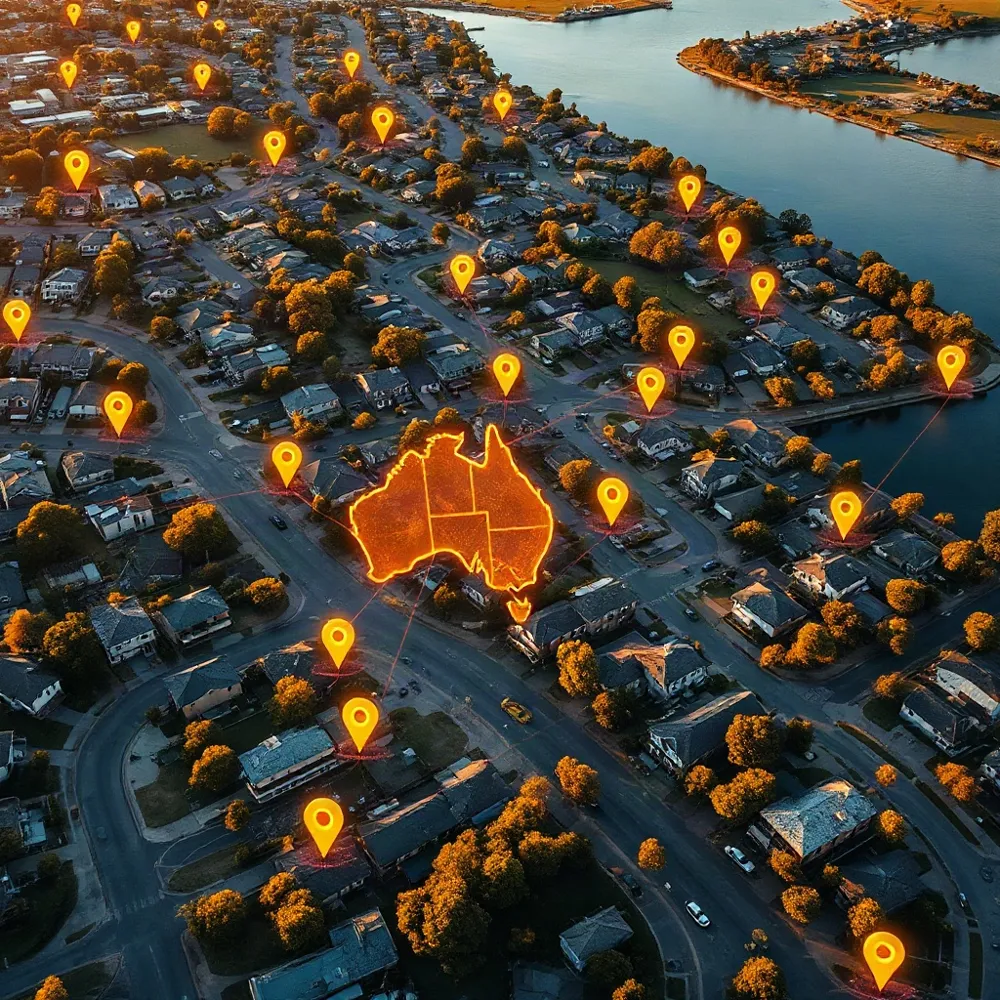
Nearly half of all Google searches have local intent, meaning the person is looking for a product or service nearby. 78% of those who search for something local on their smartphone visit a related business within 24 hours. For a tradie, café, or clinic, that kind of same-day action is extremely valuable.
Broad keywords like 'plumber Sydney' or 'dog grooming' are expensive to compete for and often attract people too far away to actually book your services. Hyper local tactics flip that equation. You target terms that include a specific suburb, street, or local landmark, which face far less competition. The trade-off is smaller search volume, but the people who do find you are highly motivated and ready to convert.
Local SEO leads convert at a rate 17% higher than non-local ones, and 28% of local searches result directly in a purchase. Consider a real example: a mobile vet service grew its top-three keyword rankings by 737% after a targeted local SEO campaign. The shift from broad to hyper local turned a low-visibility business into one that became highly visible in its local area.
By focusing on hyper local keywords and optimising your online presence for specific locations, you can attract more qualified leads and turn searches into real customers.
Understanding Google's Shift on LSA Pages
Google has been tightening the rules around Local Service Area pages, and the changes directly affect how small businesses can show up in search. The core message is simple: you can no longer create separate pages for suburbs where you don't physically operate. If your office is in North Sydney, you can't have a page claiming you're based in Parramatta.
This shift targets businesses that used fake addresses or virtual offices to rank in multiple locations, sometimes managing dozens of listings from a single real address. Google is now cross-checking your address against your actual service area, and any mismatch can lead to penalties or removal from local search results.
For honest local operators, this is good news. It reduces the competition from dodgy listings that inflated the search results and makes sure customers see genuine, nearby businesses first. Take a plumber in Brisbane who only services the inner suburbs. Before this change, they could create pages for Ipswich or the Gold Coast, confusing customers and search engines. Now, Google flags those mismatches, so their profile only shows where they actually work. If you run a legitimate single-location business, the key step is to verify that your Google Business Profile is accurate and consistent with your real address. A clean, truthful listing keeps you on Google's good side and improves your visibility in your actual service area.
New Rules for Serving Multiple Suburbs Without a Shopfront
Yes, you can absolutely rank in suburbs where you don’t have a physical shopfront. Google understands that plenty of Aussie tradies, mobile vets, and consultants work across a patch of suburbs from a single base. The trick is to prove you actually serve those areas without resorting to fake addresses or thin copy-paste pages.
One solid page beats ten thin ones
Instead of building a separate landing page for every tiny suburb and swapping only the name, create a single, well-crafted page that clearly outlines the full service area. Write genuine content for each zone you cover, mention local landmarks, specific problems you solve there, and real customer stories from that neighbourhood. This approach keeps your site clean, avoids duplicate content issues, and shows Google you have real local knowledge.
The penalties you want to avoid
Google actively penalises businesses that use fake addresses or publish thin duplicate pages that just swap suburb names. That penalty can drop you out of the local pack entirely. To avoid this, focus on three things: quality content that genuinely helps a local reader, real local relevance (testimonials that name specific suburbs), and consistent NAP (Name, Address, Phone) details across every listing.
Risks of Ignoring Google's LSA Policies
Ignoring Google’s new LSA page policies is a gamble that can backfire hard. A human reviewer from Google’s Quality team could issue a manual action against your site, which often leads to pages being ranked lower or removed from search results entirely.
In severe cases, your entire website could be deindexed. That means potential customers simply won’t find you online when they search for a plumber, café, or clinic in your area. You might also face ad disapprovals or account suspension with Google Ads, cutting off your paid traffic as well.
The safest, most practical move is to stay on top of policy changes and fix any issues promptly. Keep your Google Business Profile accurate, make sure each suburb page is genuinely useful, and respond quickly to any notifications from Google. That simple discipline protects your online presence and keeps customers coming through the door.
The New Playbook for Local SEO Success
The days of churning out dozens of thin location pages are over. Google's updated Local Service Area policies mean that strategy can now hurt more than it helps.
The winning approach starts with building one strong, well-crafted service-area page. Instead of ten weak pages that each swap a suburb name, put your energy into a single page that naturally lists the suburbs you cover, describes the specific services you offer in each area, and includes genuine local detail. Build one page properly, measure its performance over 60 days, and only then decide whether to add another.
Pair that page with real local content. Write blog posts about jobs you've completed in specific neighbourhoods, mention local landmarks and local problems you solved, and share testimonials from customers in those suburbs. This approach shows search engines you have genuine experience and deep local knowledge, which is far more valuable than a generic list of suburbs.
Actively collect real Google reviews from every happy customer and respond to every single one, whether it's glowing or critical. Reviews that name the specific suburb and the type of work done carry extra weight for hyperlocal visibility.
Finally, set your Google Business Profile service areas correctly. Keep your business hours and contact details accurate, and make sure your address and phone number are identical everywhere they appear online. Quality, relevance, and authenticity now matter far more than volume. Put your energy into becoming a local business that customers rely on.
Your 7-Step LSA Page Compliance Checklist

Keeping your Local Service Area pages on the right side of Google's guidelines doesn't have to be complicated. The core idea is simple: serve the customer, not the search engine. Work through this checklist to make sure your pages are compliant and effective.
1. List only real business addresses
Your Google Business Profile and website should list a physical address where you genuinely operate. Virtual offices or PO Boxes can trigger penalties, so be upfront about your real location.
2. Avoid pages for suburbs you don't serve
Google penalises pages for areas where you have no physical presence. Instead of creating separate pages for every suburb in your metro area, consolidate your genuine service areas onto one clear, well-written page.
3. Fill pages with practical, local content
A compliant page is a useful one. Include specific details about the services you offer in that area, mention local landmarks, and solve real problems your customers face.
4. Gather real reviews from actual customers
Genuine reviews build trust with potential customers. Ask happy customers to mention the suburb in their review, and always respond professionally. This proves to Google that you're a real business serving a real community.
5. Skip keyword stuffing and dodgy tactics
Filling a page with suburb names and location-based keywords without adding value is a red flag for Google. Write naturally for a human reader and the SEO will follow. The same goes for fake addresses or hidden text. They're not worth the risk.
6. Check mobile friendliness and NAP consistency
Most local searches happen on a phone. Your site needs to load quickly and be easy to navigate on a small screen. Double-check that your Name, Address, and Phone Number (NAP) are identical on your site, your Google Business Profile, and every directory where you're listed.
7. Maintain and refresh regularly
Google's algorithms change, and so do your customers' needs. Set a reminder to review your LSA pages every few months. Update your content, check for broken links, and keep your business hours and services current. A static page can become a liability if it drifts out of date.
Google Business Profile: Your 24/7 Sales Rep
Your Google Business Profile (GBP) is the single most important element of your local SEO strategy. When a potential customer searches "plumber near me" or "café in [suburb]", the profile that pops up in the local pack is often the first impression your business makes. Get it right, and your GBP becomes a 24/7 sales rep that answers questions, shows off your work, and makes it easy for people to call or visit.
Claiming and verifying your profile is step one. Once verified, fill out every section Google offers. That means accurate business hours, a description that includes the suburbs you serve, your phone number, website, and selecting the right categories. Businesses that add photos to their GBP get 42% more requests for directions and 35% more website clicks. Upload high-quality images of your work, your team, and your shopfront.
Reviews are another powerful trust signal. A steady flow of recent, responded-to reviews feeds both your ranking and a customer's confidence. Businesses with a strong review profile tend to rank higher and build more trust with potential customers. Encourage customers to leave a review right after a job is done, using a direct link via text message. Respond to every single one, positive or negative, with a professional and friendly tone. Incorporate the suburb name naturally in your responses where it makes sense.
Posting regular updates through GBP keeps your profile active and signals to Google that your business is engaged. Share local news, special offers, new service announcements, or even a photo from a recent job at a local landmark. These posts appear directly in your listing and give customers another reason to choose you over a competitor with a stale profile.
A well-optimised GBP costs nothing but your time, yet it competes directly with paid ads for the same map-pack real estate. Because unlike a paid ad that stops when the budget runs out, your GBP keeps working for you every hour of the day.
Building Local Authority Beyond the Profile
Your Google Business Profile is the front door, but the rest of your online presence is what builds the trust that gets customers through it. Local authority comes from three interconnected areas: consistent citations, local backlinks, and genuine community engagement.
Get your citations rock solid
A local citation is any online mention of your business name, address, and phone number (NAP). This includes directories like Yellow Pages, True Local, Yelp Australia, and local council business directories. Google uses these mentions to verify your business is legitimate. Even small inconsistencies, a missing 'Rd' instead of 'Road', can confuse search engines and hurt your local rankings. Run an audit with a tool like BrightLocal to find and fix mismatches across the web.
Earn backlinks that say 'this business belongs here'
Local backlinks, links from other local websites to yours, act as powerful trust signals. They tell Google your business is part of the community. Build them through local sponsorships (sports teams, school events, charity runs), partnerships with related businesses (a plumber linking to a local real estate agent), and by getting featured in local news or community blogs.
Create content locals want to share
Create content that is genuinely useful for your neighbourhood. A guide like 'Top 5 Cafés in Newtown for Remote Workers' or an event page for a local market attracts citations, shares, and links naturally. This kind of content positions your business as a community resource, not just a service provider.
Let reviews and community engagement do the heavy lifting
Online reviews are the most visible trust signal. Respond to every review, thank someone for a positive one and address negative feedback professionally. Beyond reviews, engage with local Facebook groups, sponsor a neighbourhood event, or partner with a nearby café for a cross-promotion. Each interaction reinforces your local presence.
Track what matters
Authority is not just about feeling established; it needs to be measurable. Use Google Search Console and your GBP insights to track local keyword rankings, your visibility in the local 3-pack, and how many people call, get directions, or visit your website from local searches. If those numbers are climbing, your authority is building.
Hyper Local SEO's Protection Against AI Search Disruption
One of the biggest worries for small business owners in 2025 is whether AI search will make their online marketing efforts redundant. The short answer is no, especially for hyper local SEO. A study from Digital Nomads HQ that analysed over 116,000 Australian search results found that local searches triggered an AI Overview only 24.7% of the time. In contrast, general searches showed an AI Overview 40.1% of the time, a 38% drop. For local service businesses, that gap means the traffic you earn from being visible in your neighbourhood is significantly more insulated from AI disruption.
This makes hyper local SEO one of the safest long-term investments a tradie, café, or clinic can make. When someone searches for "electrician near me" or "best coffee in Newtown", Google still leans heavily on the three-pack and local results rather than an AI-generated answer. The intent is too transactional and time-sensitive for an overview to replace real business listings. Your Google Business Profile, your suburb-specific pages, and your reviews remain the deciding factors for whether a customer picks up the phone.
The compounding nature of local SEO also matters here. Unlike Google Ads, which stops the moment you pause spending, the work you put into local SEO keeps earning visibility month after month. Most local businesses see meaningful movement in their rankings within three to six months, and those rankings tend to hold steady as long as the profile and local listings stay maintained. Combine that with a small Google Ads budget for immediate leads, and you get a strategy that's both durable and responsive. Working with an experienced SEO agency that focuses on strategy before ad spend can help set up that balance so you are not left scrambling when the next algorithm update rolls out.
Compassionate but Firm Summary for Small Business Owners
Hyper local SEO gives small businesses a genuine shot at standing toe to toe with the big players. You do not need a huge marketing budget to show up when someone in your suburb searches for what you offer.
The formula is straightforward: keep your Google Business Profile accurate, build quality service-area pages that actually help a local reader, earn genuine reviews from real customers, and create content that speaks to your neighbourhood. Google's tighter rules on Local Service Area pages are actually a win for honest operators. They push the lazy, thin pages out of the way and reward the businesses that take the time to do it right.
If you are just starting out, pick one suburb, build a single well-optimised page with real local detail, and get your GBP fully filled in. See how it performs over a couple of months, then expand to the next suburb. Small, consistent steps build the kind of local authority that keeps paying off long after the work is done.
Your Next Move in the Hyper Local Game
The case for hyper local SEO comes down to two simple facts. It delivers leads that are far more likely to convert, because the person searching is right there in your suburb or the one next door. And it's one of the most stable parts of search, with AI overviews appearing less often for local queries than for broad ones.
Treating hyper local SEO as a quick fix or a set-it-and-forget-it task misses the point. It's a long-term asset, like having a well-painted storefront that keeps drawing people in, month after month. Google's algorithm updates come and go, but a business that genuinely serves its community and shows that through its online presence stays visible.
Start today. Audit your Google Business Profile and make sure every field is complete and accurate. Review your current strategy: are you trying to rank for too many suburbs with thin pages? Pick one real service-area page, build it properly with local detail, and measure the results over 60 days. OZ Media Digital helps Australian businesses take this approach with their hyper-local SEO services, focusing on one suburb at a time rather than spreading efforts too thin.
What sets your business apart in search is the same thing that sets it apart in your neighbourhood: local knowledge and authenticity. No national chain can match your experience of your own street. Use that. Write about local problems, mention landmarks, show up at community events, and let genuine reviews do the talking. That's the ultimate competitive advantage, and it's one you already have.