 OZ Media Digital
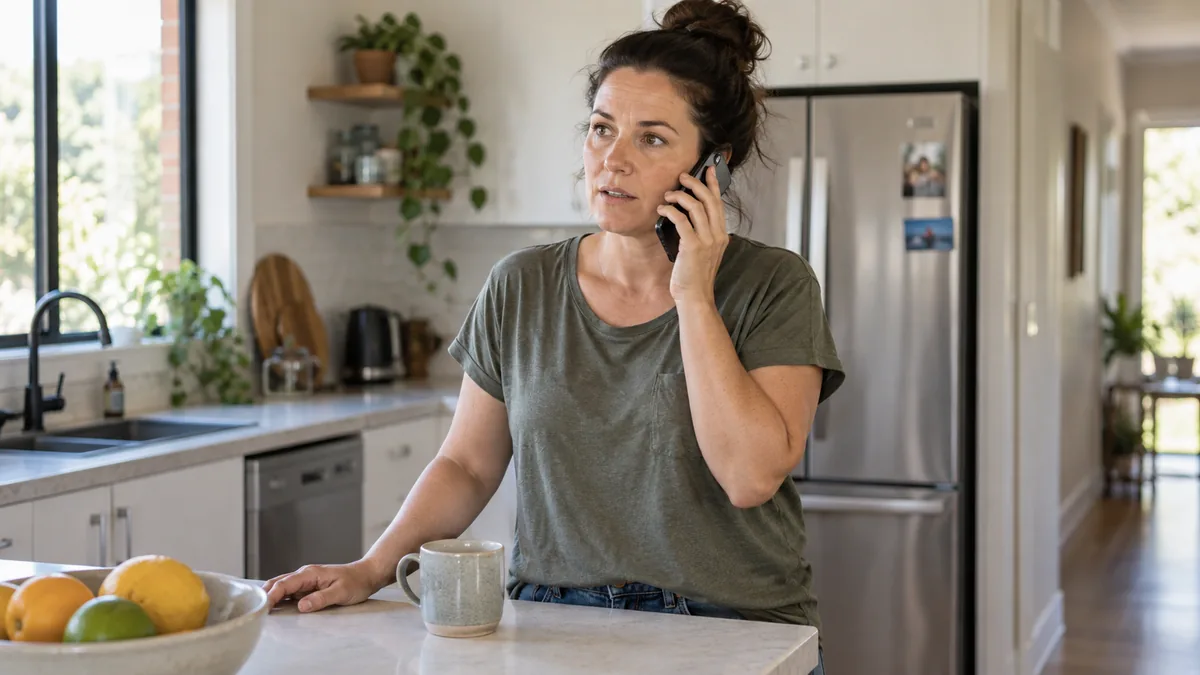
If you're waiting more than five minutes to call back a new lead, you're already losing most of them to whoever answers the phone first, usually a competitor. Research from InsideSales.com and MIT found that contacting a lead within five minutes makes you dramatically more likely to actually reach them and qualify them than waiting even thirty minutes longer, and Harvard Business Review found leads contacted within an hour are roughly seven times more likely to have a meaningful conversation than those contacted after that window closes. For a service business, a plumber, a physio, a mortgage broker, a buyer's agent, this isn't a nice-to-have metric. It's the difference between a lead you paid for actually turning into a booked job, and a lead that quietly goes to the next business on the list.
This guide sets out the real data on lead response speed, what slow response is actually costing Australian small businesses, and, more usefully, the practical, affordable ways to fix it without hiring a full-time receptionist.
TL;DR
- Leads contacted within five minutes convert at multiples of the rate of leads contacted even an hour later, this is one of the most consistently replicated findings in sales research, dating back over a decade and still holding in 2026 benchmark data.
- The average B2B company takes around two full days to respond to a new lead, and more than half never respond at all, most Australian small businesses aren't doing much better, particularly outside business hours.
- Missed calls are a direct, measurable revenue leak for trades and local service businesses, not just a "nice to fix" efficiency issue.
- Google itself tells advertisers that faster response times on message leads drive better ad performance in Local Services Ads, speed isn't just a sales metric, it affects what you pay for leads too.
- You do not need a call centre to fix this. Missed-call text-back, after-hours booking links, and basic CRM automation close most of the gap for under the cost of one missed job a month.
Why Does Lead Response Speed Matter So Much?
Because the buying window for most service categories is short, and your competitors are one Google search away. When someone searches "emergency plumber near me" or fills in an enquiry form for a mortgage pre-approval, they are very rarely contacting only one business. The business that responds first gets first crack at the conversation, and in a lot of cases, gets the job before anyone else even calls back.
This is backed by some of the most-cited research in sales and marketing: the original Lead Response Management study (InsideSales.com, working with MIT) tracked contact and qualification rates against response time and found the odds of successfully qualifying a lead drop sharply once you move past the five-minute mark, continuing to fall the longer you wait. Harvard Business Review's own research (Oldroyd, McElheran and Elkington) found a similar pattern independently: leads contacted within an hour of first enquiry were roughly seven times more likely to result in a meaningful qualifying conversation than leads contacted after that hour had passed. These aren't recent viral stats, they're long-standing, independently replicated findings that continue to be the reference point for every current speed-to-lead benchmark report published in 2026.
Separate analysis of phone-based leads (Velocify, drawing on 3.5 million sales leads) found that even the gap between a one-minute and a two-minute delay in calling a lead back measurably reduced conversion, which tells you this isn't only about "same day versus next day." It's about minutes.
How Slow Are Most Businesses Actually Responding?
Slower than owners usually assume. Drift's audit of 433 B2B companies' response behaviour found an average response time of around 47 hours, close to two full days, and that 58% of companies never responded to a web lead at all. Those figures are for B2B software and services, where buyers expect some delay. Local service businesses operate on a much tighter clock: someone with a burst pipe, a toothache, or a finance pre-approval deadline is not going to wait two days, and won't file a complaint, they'll simply call the next number.
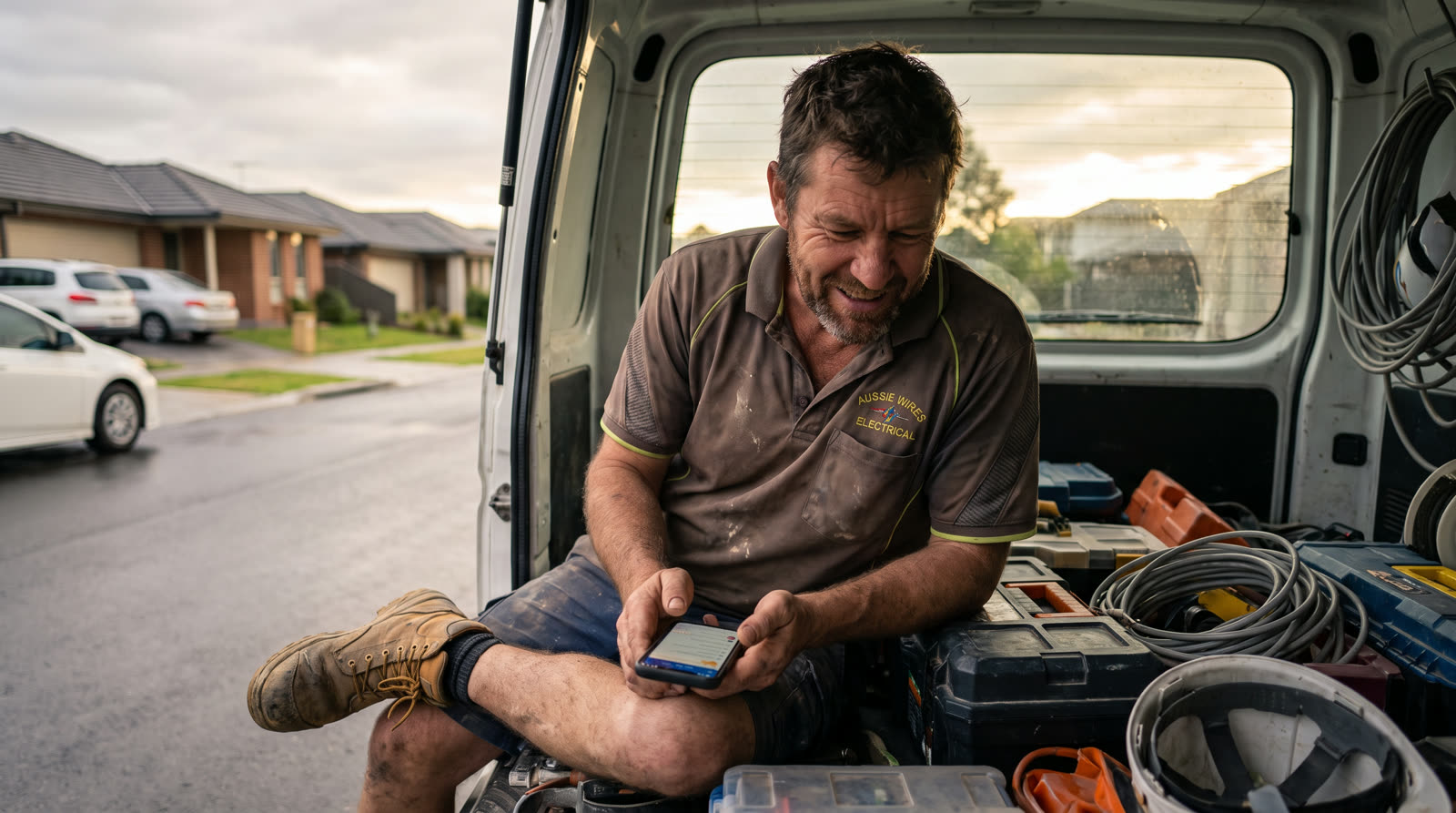
For Australian trades and local service businesses specifically, the more relevant failure point is usually the missed call, not the slow email reply. Case study data collected by lead-recovery vendors working with Australian tradies shows the pattern clearly: solo operators commonly miss three to five calls a day while on the tools, and a large majority of those callers never ring back, they move to the next result. One documented case (a Gold Coast residential electrician) found that after introducing automatic SMS follow-up to missed calls, previously-lost enquiries converted into real booked jobs within the first month. That's a single business's result, not a universal benchmark, but it illustrates the mechanism: the leak isn't leads disappearing from the top of the funnel, it's leads disappearing between the missed call and any follow-up ever happening.
Does Response Speed Actually Affect Ad Performance and Cost, Not Just Conversion?
Yes, and this is worth knowing if you're already running Google Ads or Local Services Ads. Google's own Local Services Ads help documentation tells advertisers directly that for message-based leads, your average response time can be displayed in your ad, and that quicker response times drive greater consumer engagement with that ad. In other words, slow response doesn't just cost you the individual lead, over time it can quietly work against the performance of the ads you're paying for. If you want the fuller picture on how Google's automation and AI-driven ad formats are changing lead quality and cost, see our guide on Google Ads in the AI era.
This matters more as more enquiries arrive through message and form channels rather than phone calls, Australia has 26.2 million internet users and 34.1 million active mobile connections as of late 2025 (DataReportal's Digital 2026 Australia report), and a growing share of local enquiries now start as a message, form fill, or Google Business Profile chat rather than a phone call. A fast phone answer alone no longer covers the whole problem.
What's a Realistic Response-Time Target for a Small Business?
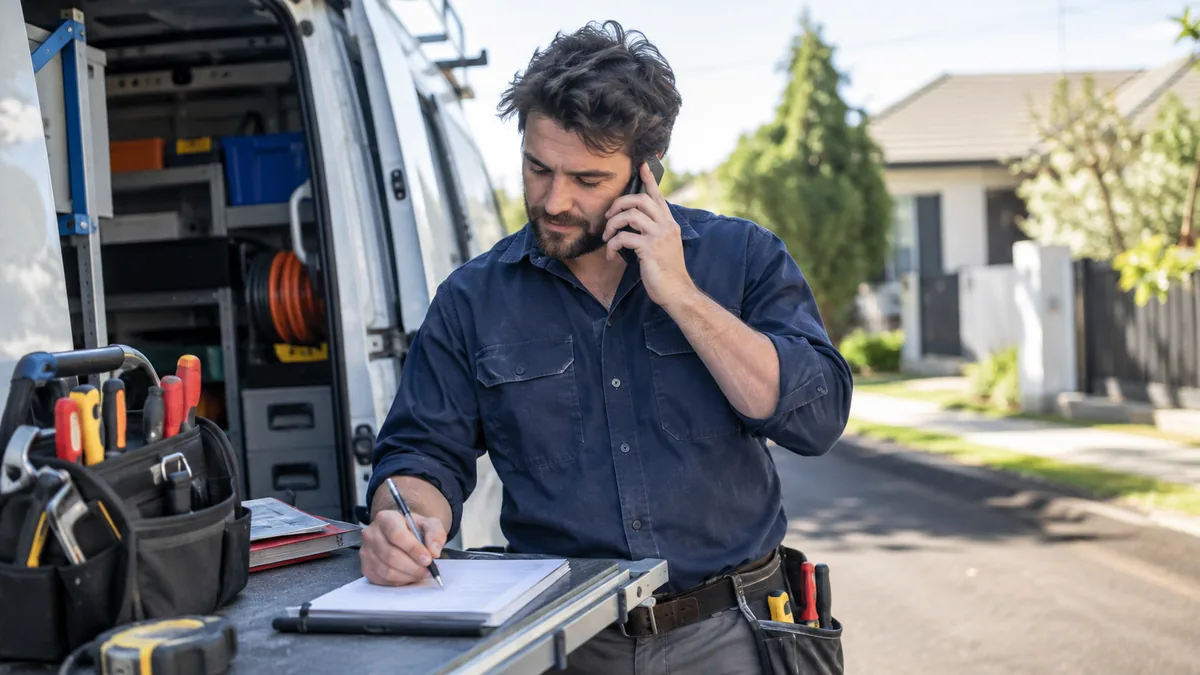
There's no single number that applies to every industry, but the research gives a workable hierarchy to aim for:
Under 5 minutes is the gold standard for inbound calls and hot enquiries (someone actively searching for an urgent service right now, emergency trades, urgent health appointments). This is where the qualification-rate research shows the steepest drop-off if you miss the window.
Under 1 hour is the realistic minimum for form fills, message leads, and quote requests during business hours. This is the threshold Harvard Business Review's research treats as the meaningful cut-off between "still warm" and "cooling fast."
Same business day, with an immediate automated acknowledgement is the fallback for anything that comes in after hours or on weekends, the acknowledgement (a text or auto-reply confirming you've received the enquiry and will call back) matters almost as much as the eventual human response, because it stops the prospect assuming you've ignored them and moving on.
The cost of delay is front-loaded. The biggest drop in your odds of converting a lead happens in the first hour, not gradually over days.
How Do You Actually Fix This Without Hiring a Receptionist?

This is where most small businesses stall, they know speed matters but assume fixing it means staffing a phone 24/7, which isn't realistic on a trades or clinic budget. In practice, most of the gap closes with a handful of low-cost, largely automated fixes:
Missed-call text-back. The single highest-leverage fix for phone-based businesses. When a call goes unanswered, an automatic SMS goes out immediately with a short message and a booking link or callback offer. This alone addresses the "never call back" problem directly, you're reaching the caller in the same window they'd otherwise be dialling your competitor.
After-hours booking and quote links. For enquiries outside business hours, a simple online booking page or quote-request form that confirms receipt instantly buys you time until the next business day without losing the lead cold.
Google Business Profile messaging turned on and monitored. A meaningful share of local searches now message directly from the Google listing rather than calling. Leaving this channel unmonitored is functionally the same as not answering the phone.
Basic CRM lead routing and alerts. Even a simple rule, new enquiry triggers an instant notification to whoever's rostered to respond that day, closes most of the internal delay that has nothing to do with technology and everything to do with nobody knowing a lead came in.
AI-assisted first response. For businesses fielding a genuinely high volume of enquiries, an AI receptionist or chat assistant can handle the immediate acknowledgement, basic qualifying questions, and booking, leaving the human follow-up for once genuine interest is confirmed. We cover this in more depth in our guide to AI in marketing for small businesses.
None of these require replacing your team or your process, they require making sure no enquiry sits untouched for hours simply because nobody was free to look at the phone.
Where Does This Fit Into Your Broader Lead Generation System?

Response speed is one link in a longer chain, it doesn't matter how fast you respond to a lead that was poorly qualified in the first place, and a fast response to a good lead still needs a solid follow-up process behind it to convert. If you haven't mapped out how enquiries actually move from first click to paying customer, our pillar guide on building a lead generation system that converts is the right starting point before optimising any single stage. It's also worth revisiting how prospects are finding you in the first place, our guide on how customers find local businesses now covers the search, Maps and AI channels feeding your enquiry volume, since a channel mix shift (more messages, fewer calls) changes what "fast response" needs to cover.
If you're not yet confident your current marketing spend is generating leads worth responding to quickly in the first place, our guide on how much small businesses should spend on digital marketing is a useful companion piece, speed only pays off on leads that were worth capturing.
Frequently Asked Questions
How fast should I respond to a new lead?
Aim for under five minutes for hot inbound calls and active enquiries, under one hour for form fills and messages during business hours, and same business day (with an instant automated acknowledgement) for anything after hours. The research consistently shows the steepest conversion drop-off happens in the first hour, so treat that window as the priority, not an afterthought.
Does slow response time really cost that much, or is this overstated?
The direction of the effect is one of the most consistently replicated findings in sales research, multiple independent studies (InsideSales.com/MIT, Harvard Business Review, Velocify) using different datasets all found the same pattern: faster response correlates strongly with higher contact and conversion rates, with most of the drop-off happening in the first hour. The exact multiplier varies by study and industry, so treat any single headline number cautiously, but the underlying trend is not in serious dispute.
What's the single easiest fix if I can only do one thing?
Missed-call text-back. It requires no change to how you answer the phone, it simply catches every call you don't pick up and gets an SMS out in the same window the caller would otherwise be trying your competitor.
Do I need an AI receptionist or chatbot to fix this?
No, for most small businesses, missed-call text-back and a monitored after-hours booking link close most of the gap on their own. AI-assisted response tools are worth considering once enquiry volume is high enough that a human genuinely can't respond fast enough during peak periods, not as a first step.
Does this apply to leads from Google Ads and Local Services Ads specifically, or just organic enquiries?
It applies to all of them, and paid leads arguably matter more, you've already spent the money to generate that enquiry, so a slow response wastes the ad spend as well as the opportunity. Google's own Local Services Ads guidance notes that faster response times on message leads improve ad engagement, so speed can affect your paid performance directly, not just your close rate.
How do I know if response speed is actually a problem in my business?
Audit your last 20 to 30 leads: how long did each genuinely take to get a first response, measured from the customer's perspective (a call, text or answered message, not an internal note)? Most business owners are surprised by the gap between what they assume happens and what their phone or CRM logs actually show.
If tracking, routing and responding to leads fast is a genuine weak point in your business, that's exactly the kind of system OZ Media Digital's AI-powered marketing services are built to fix. If you'd like a straight-talking look at how quickly your current setup actually responds to a new enquiry, book a time to talk it through.
Sources and References
- Lead Response Time: The 5-Minute Rule That Transforms Conversion and related aggregations citing the InsideSales.com/MIT Lead Response Management study and Velocify's 3.5-million-lead analysis
- What the Harvard Study on Lead Response Teaches About Sales ROI, summarising Oldroyd, McElheran & Elkington, Harvard Business Review
- Speed-to-Lead Statistics 2026: 17 Data Points, Drift's 433-company response-time audit
- Local Services Ads requirements, Google Local Services Help, accessed September 2026
- Missed Calls Cost Tradies, Lucra AI, Australian case study data
- Digital 2026: Australia, DataReportal, 5 November 2025