 OZ Media Digital
Australia's cafe culture is famously crowded. Walk down almost any high street, in Hornsby, on the North Shore, or in any Australian suburb with a train station and a bit of foot traffic, and you'll find two or three cafes within sight of each other, all serving genuinely good coffee. In that environment, serving excellent coffee and food is no longer enough on its own. Who gets found, and who gets recommended, increasingly comes down to two things: traditional local SEO, and the newer discipline of AI search optimisation.
As customers increasingly ask their phones and AI assistants where to get a coffee rather than typing a search and scrolling through links, optimising for both matters more than it did even two years ago. This guide walks through the practical strategies that actually move the needle for a cafe in 2026, whether you're a single-site local favourite or running a small handful of locations.
The shift to AI search: beyond traditional SEO
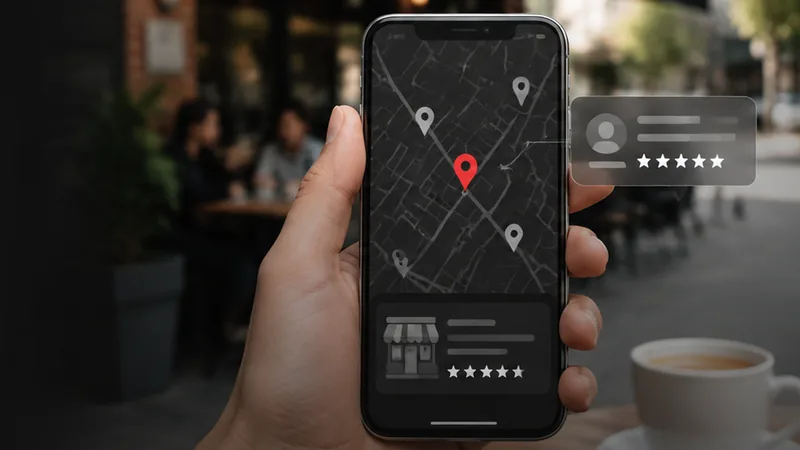
Traditional SEO has always been about keywords and links, earning a place in Google's ten blue links. What's changed heading into 2026 is that a meaningful share of local, conversational searches, "best coffee near me that's open now", "cafe with good vegan options near the station", now surface an AI-generated summary before the customer ever sees a traditional list of results. Google's AI Overviews and AI Mode, alongside assistants like ChatGPT and Gemini, are increasingly the first thing a customer reads.
For a cafe, that means the goal has quietly shifted. It's no longer just "rank in the top ten." It's "be the business an AI system is confident enough to name directly," rather than one of several links a customer has to click through and compare themselves.
| Feature | Traditional SEO (links) | AI search / AEO (answers) |
|---|---|---|
| Primary goal | Ranking in the top 10 results | Becoming the primary cited or recommended source |
| Content focus | Keyword coverage and page length | Fact-density, directness and scannability |
| Trust signal | Backlink quantity and anchor text | Consistent business details and genuine reviews |
| User interaction | Customer compares several results themselves | Customer often receives one confident recommendation |
1. Get your Google Business Profile genuinely complete
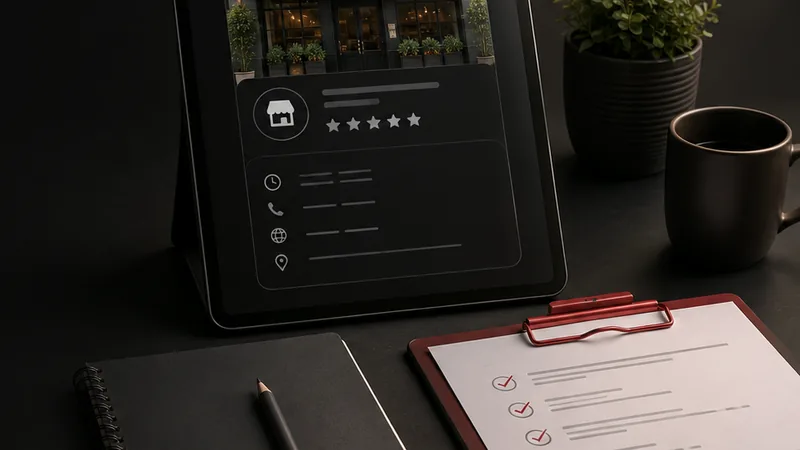
Your Google Business Profile is still the cornerstone of local SEO for any cafe, and it's usually the first thing both a human customer and an AI system check to verify you're a real, currently-operating business. A handful of things matter more than the rest:
- Claim and verify it if you haven't already, this is the non-negotiable first step.
- Keep your name, address, phone number and hours identical everywhere they appear online. Inconsistency between your website, your profile and directory listings is one of the more common reasons AI systems either get a detail wrong or leave a business out of a recommendation entirely.
- List what you actually offer, coffee style, food menu highlights, dietary options, catering, so both customers and AI systems understand your offering rather than guessing from a generic "cafe" category.
- Post regularly, specials, new menu items, events, and photos. An active profile signals a currently-operating, well-run business.
- Upload genuine photos of your space, your food and your coffee. This is also useful raw material for anything you later want to reuse in ads or on social media.
- Ask for reviews, and respond to all of them. Reviews are a genuine ranking factor, and both customers and AI systems weigh the sentiment and content of your reviews when deciding whether to recommend you.
2. Write hyper-local content that answers real questions
Customers increasingly search, or ask an AI assistant, in full sentences: "best brunch spot near Hornsby station" or "cafe with good vegan options open on a Sunday." Your website content needs to answer those specific questions directly, not just describe your business in general terms.
- Answer common questions directly on your website, with the actual answer in the first sentence of the section, not buried under three paragraphs of scene-setting. That structure makes it far easier for an AI system to extract and cite your answer.
- Reference genuine local landmarks, your street, nearby stations, well-known local businesses, so both search engines and AI systems have concrete signals of exactly where you are and who you serve.
- Write occasional local-relevance content, "Where to get a decent coffee near Hornsby station before 7am" is a far more specific, more findable piece than a generic post about "why coffee matters."
We cover the broader version of this, how local discovery actually works across Google, Maps, reviews and AI search, in How Customers Find Local Businesses Now.
3. Add structured data so AI systems don't have to guess
Schema markup is code added to your website that tells search engines and AI systems exactly what they're looking at, rather than leaving them to infer it from ordinary text. For a cafe, a few schema types do most of the work:
- LocalBusiness schema, covering your business type, address, phone number and opening hours, stated with certainty rather than inferred.
- Restaurant or CafeOrCoffeeShop schema, to specify cuisine, menu and (if relevant) reservation options.
- FAQPage schema, for any FAQ section on your site, explicitly marking questions and answers as retrievable content.
- Review schema, to surface genuine customer feedback in a structured, machine-readable way.
This is a one-off technical setup rather than an ongoing task, and it's the kind of foundational work we build into every site through our Local SEO service.
4. Get the technical basics right so AI crawlers can actually read your site
Even genuinely useful content won't be found if it's difficult for crawlers, human or AI, to access. A few fundamentals matter most for a small cafe website:
- Mobile-friendliness and speed. The overwhelming majority of "near me" cafe searches happen on a phone, often while someone is already walking. A slow or clumsy mobile site loses customers before they even see your menu.
- A clear, simple site structure, so both people and crawlers can find your menu, hours and location without hunting for them.
- An optional
llms.txtfile, a newer, still-emerging convention similar torobots.txtthat some AI crawlers use for guidance. It's worth having if you're already investing in AI visibility, but it's not currently used by Google Search itself, so it's a nice-to-have addition, not a substitute for the fundamentals above.
5. Keep your details consistent everywhere your cafe is listed
AI systems weigh what's sometimes called "entity trust", whether your business's details are consistent and verifiable across multiple sources. Inconsistency is one of the more common reasons an AI system gets a detail wrong or leaves a business out of a recommendation entirely.
- Keep directory listings accurate, wherever your cafe appears, from general directories to hospitality-specific ones.
- Maintain an active, consistent social presence, particularly Instagram and Facebook, with the same name, address and hours as everywhere else.
- Local mentions genuinely help, a mention from a local news outlet, food blog or community group is a meaningful trust signal, worth more than a handful of low-quality directory listings.
6. Don't underestimate authenticity and community
Both customers and AI systems increasingly favour authenticity over polish. For a local cafe, that usually means genuine community engagement rather than another generic marketing push:
- Take part in or sponsor local markets, events or fundraisers.
- Work with local food-focused social accounts or community voices who genuinely reflect your brand, rather than chasing follower counts.
- Tell the actual story behind your cafe, why you started it, what you care about, what makes your version of a flat white different. That's the kind of specific, human detail that generic AI-written content can't fake, and it's exactly the kind of content that helps you stand out in an AI-generated summary too.
Frequently Asked Questions
Does a small cafe really need to worry about AI search, not just Google?
Yes, to a growing degree. AI Overviews and AI Mode already sit above traditional results for many local, conversational searches like "best coffee near me open now". The same fundamentals that help you rank normally, an accurate Google Business Profile, genuine reviews, and clear website content, are what AI systems draw on to decide which cafe to recommend.
What's the single highest-priority fix for a cafe's local SEO?
A complete, accurate and consistently updated Google Business Profile. It's free, it's usually the first thing a customer or an AI system checks, and an incomplete or inconsistent profile undermines every other SEO effort you make.
Do I need a website if my cafe already has a strong Google Business Profile?
A Google Business Profile handles local discovery well, but it can't hold detailed menu pages, dietary information, your story, or the schema markup that helps AI systems understand your business in depth. The two work best together, not as substitutes for each other.
Is schema markup worth the effort for a small cafe?
Yes, particularly LocalBusiness and Review schema. It's a one-off technical setup that gives search engines and AI systems explicit, structured facts about your cafe, its location, hours and reputation, rather than making them infer it from unstructured text.
Where to start
For a cafe owner navigating this in 2026, the answer isn't choosing between local SEO and AI search, it's building both on the same foundation: a genuinely complete Google Business Profile, hyper-local website content that answers real questions directly, and the structured data that lets AI systems state your details with confidence instead of guessing.
If you'd rather have this built and managed properly, Google Business Profile optimisation, local content, schema markup and reviews, that's exactly what our Local SEO service covers for hospitality and local businesses across Hornsby and the North Shore. Book a free strategy session and we'll take a direct look at how your cafe currently shows up in local and AI search.