 OZ Media Digital
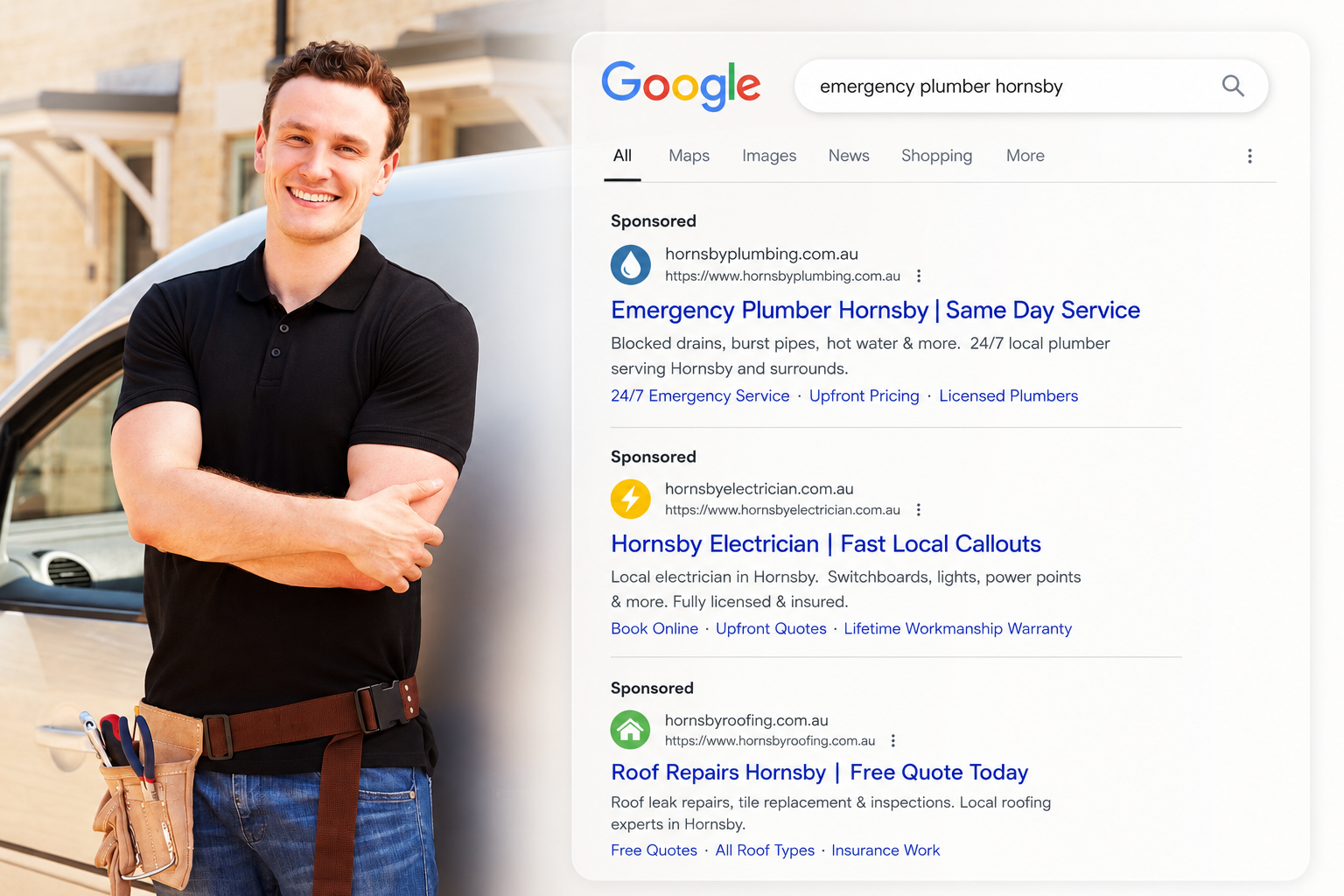
Google is retiring Dynamic Search Ads in favour of a new AI-driven format called AI Max for Search, and Performance Max keeps absorbing more of the platform, including, eventually, Local Services Ads. If you run Google Ads for a service business, the practical answer is this: you're not being asked whether you want more automation, you're being told when you're getting it. The businesses that come out ahead won't be the ones who resist that shift. They'll be the ones who understand exactly what control they still have, and use it deliberately instead of leaving every setting on default.
The short version:
- Google is phasing out Dynamic Search Ads (DSA) and automatically converting them to AI Max for Search. Voluntary upgrades started in April 2026, automatic conversion begins September 2026, and DSA fully sunsets in February 2027 (Google pushed this date back once already after advertiser feedback).
- Performance Max isn't new, but it keeps expanding. Google has confirmed Local Services Ads will eventually migrate into the Performance Max platform too, starting with select US categories from August 2026, with non-US markets (including Australia) expected in 2027.
- Automation doesn't mean zero control. Google's own documentation confirms advertisers still set audience signals, brand exclusions, negative keywords, budgets, and target ROAS/CPA. The AI optimises within those boundaries, it doesn't replace them.
- US benchmark data (WordStream, 2026, 13,000+ campaigns) shows an overall average CPC of USD $5.42 and average cost per lead of USD $66.69, with home services and business services sitting close to those averages. No equivalent Australian-specific benchmark was found. Treat this as directional, not a local quote.
- The ACCC has previously found Google holds a dominant position across the ad tech supply chain, with more than 90% of ad impressions passing through at least one Google service. That's a reasonable, non-paranoid reason to keep your own exclusions, tracking, and reporting rather than trusting the platform's defaults blindly, not a reason to avoid Google Ads.
- For most Australian service businesses, the right move in 2026 isn't "resist AI Max and Performance Max" or "hand everything over to automation." It's controlled automation: feed the AI good inputs, keep your guardrails tight, and check performance against your own numbers, not just the platform's dashboard.
What's Actually Changing in Google Ads Because of AI?
Two structural shifts are happening at once, and it's worth separating them because they move on different timelines.
The first is the phase-out of Dynamic Search Ads. Google announced that DSA (the format that automatically generated headlines and landing pages from your website content) is being upgraded into AI Max for Search, a broader AI-powered layer that combines your existing keywords and assets with real-time intent signals to find additional relevant queries. Google's own announcement describes it as designed to "find even more untapped queries, while ensuring your ads always stay relevant," with advanced controls for brand and location settings layered on top.
The second is the continued expansion of Performance Max, the fully automated, cross-channel campaign type that already runs ads across Search, Display, YouTube, Gmail, Maps, and Discover from a single campaign. Performance Max isn't new in 2026, but its footprint keeps growing. Most notably, Google has confirmed that Local Services Ads, the pay-per-lead format widely used by trades and home-service businesses, will eventually be absorbed into the Performance Max platform as well.
Neither of these is optional in the way choosing a bidding strategy used to be. DSA advertisers are being migrated whether they opt in early or wait for the automatic conversion. That's the real story for 2026: less a case of "should I try AI-powered campaigns" and more "your account is being restructured around them, how much say do you want in how that happens."
What Is AI Max for Search, and Is It Really Replacing Dynamic Search Ads?
Yes, functionally. AI Max for Search is Google's replacement for DSA, built to do a similar job (filling gaps in keyword coverage using your website and existing assets) but with a larger AI layer doing the matching and more explicit controls for advertisers to shape the outcome, such as brand exclusions and location settings that DSA didn't offer in the same form.
The practical difference for a small business owner: DSA used your site content fairly mechanically to generate headlines. AI Max uses a broader read of intent signals, what people are actually searching for and why, combined with the assets and keywords you provide, to surface additional queries your existing campaigns might be missing. Done well, that means picking up relevant searches you hadn't thought to bid on. Done carelessly, with no brand exclusions or negative keyword lists in place, it means the same risk DSA always carried: showing up for searches that have nothing to do with what you actually offer, and burning budget doing it.
When Do I Have to Move to AI Max, and What Happens If I Don't?
Here's the actual timeline, straight from Google's announcement: voluntary upgrades opened from April 2026, automatic upgrades begin in September 2026 (and no new DSA campaigns can be created from that point), and DSA campaigns still running will be fully sunset by February 2027, a date Google pushed back from an original September 2026 deadline after advertiser feedback.
If you're currently running DSA campaigns, you have a genuine choice right now, but it's a shrinking one. Upgrading voluntarily lets you review and set your controls (brand exclusions, negative keywords, budget) before the AI starts running with them. Waiting for the automatic conversion means Google carries your legacy settings across as-is to "maintain performance stability," which sounds reassuring but really means: whatever gaps existed in your old DSA setup get carried straight into the new one, now with a bigger AI layer amplifying whatever you didn't fix. If your DSA campaign has ever generated a query you were embarrassed to be showing up for, that's worth fixing before the automatic switch, not after.
What Is Performance Max, and How Automated Is It Really?
Performance Max is Google's all-in-one automated campaign type. You provide the inputs (text, images, video assets, audience signals, and a goal such as a target return on ad spend or cost per acquisition) and Google's AI handles the rest: which channel to show on, which creative combination to use, and how much to bid in each auction, in real time, based on predicted conversion probability. Google's own documentation describes this as the system "funnel[ling] your budget toward the highest performing inventory and placements" using "real-time auctions" that "bid based on your conversion probability."
That's genuinely more automated than a traditional Search campaign, but it isn't a black box you have zero input into. According to Google's guidance, advertisers retain meaningful levers: audience signals to guide early learning toward your best customer profiles, brand exclusions and negative keywords to block irrelevant queries, and structured asset groups where you control the actual creative going out. The honest way to describe Performance Max is constrained automation: you set the boundaries and the goal, the AI optimises the moment-to-moment decisions inside them. The businesses that get burned by Performance Max are almost always the ones that skipped setting those boundaries in the first place, not the ones who used it deliberately.
Is Performance Max Eating Into Local Services Ads Too?
Yes, eventually, and this one is worth watching rather than acting on yet if you're an Australian advertiser. Google has confirmed that Local Services Ads, the pay-per-lead format many trades and home-service businesses rely on, is being migrated into the Performance Max platform. The pay-per-lead pricing model stays the same (you're still charged for qualified calls and messages, not clicks), but management moves into the main Google Ads interface, weekly budgets convert to daily averages, and some current LSA features (manual bidding, vertical-level Target CPA, BBB callouts) are being retired in the process.
The rollout is genuinely staged: initial migration began in August 2026 for a limited set of home and storefront service categories in the US, expanding to broader US advertiser groups later in 2026, with non-US markets, including Australia, expected to follow in 2027. If you're running Local Services Ads in Australia today, this isn't an immediate action item, but it is a reason to start downloading and archiving your historical LSA performance reports now rather than later, since Google's own guidance notes that historical reporting doesn't automatically transfer during migration.
How Much Control Do I Actually Keep Over an AI-Run Campaign?
More than the marketing around "fully automated" suggests, but less than a fully manual campaign, and the distinction matters for how you should actually manage one. Across both AI Max and Performance Max, the controls that remain yours are: your budget (Google doesn't decide how much you spend in total, only how it's allocated within that budget), your bidding goal (target ROAS or target CPA), your exclusions (brand terms, negative keywords, irrelevant placements), your audience signals (who the AI should treat as a strong-fit customer while it's still learning), and your creative assets (the actual text, images, and video the system has to work with).
What you give up is granular, query-by-query and placement-by-placement visibility and control. You can't see or approve every individual search term an AI Max campaign matches to the same level DSA allowed, and you can't hand-pick every placement a Performance Max campaign runs on. For a small business owner used to manually reviewing search term reports every week, that's a real adjustment, not just a UI change. The right response isn't to disengage because "it's all automated now." It's to shift your attention from micromanaging individual queries to setting stronger boundaries up front (exclusions, audience signals, creative quality) and auditing outcomes at the account level regularly instead.
Should I Trust Google's Automation With My Ad Budget?
Be appropriately skeptical, not paranoid. There's a legitimate structural reason for a small business owner to want independent checks on any platform that both runs the auction and tells you how well you're doing in it: the ACCC has previously found that Google holds a dominant position across the ad tech supply chain, with more than 90% of ad impressions in Australia passing through at least one Google service, and flagged inherent conflicts of interest in Google simultaneously representing advertisers and publishers. That's not a reason to avoid Google Ads. It's still where the overwhelming majority of Australian search demand lives, but it is a solid, non-conspiratorial reason to keep your own conversion tracking accurate and independent (not just trusting Google's reported conversions), review account performance against your actual CRM and revenue numbers rather than platform dashboards alone, and never let "the AI is handling it" become a reason to stop checking in.
What Does This Actually Cost, and Is It Worth It for a Small Service Business?
Be honest about what data actually exists here before quoting a number with false confidence. A widely cited 2026 industry benchmark report (WordStream, drawing on more than 13,000 search campaigns between April 2025 and March 2026) puts the overall average cost-per-click across all industries at USD $5.42 and average cost per lead at USD $66.69. Categories closest to Australian service businesses sit in a similar range: Home & Home Improvement averaged USD $8.33 CPC and USD $90.92 cost per lead, Business Services averaged USD $5.87 CPC and USD $93.69 cost per lead. This is US data in US dollars, not an Australian figure, and should be treated as a rough directional benchmark rather than what you should expect to pay locally. Australian CPCs vary heavily by industry, location, and competition, and no verified AU-specific 2026 benchmark of comparable rigour was found in today's research.

Whether AI Max or Performance Max is "worth it" isn't really a cost-per-click question anyway. It's a cost-per-qualified-lead-that-converts-to-a-customer question, and that number is specific to your business, not a benchmark. The AI-driven formats generally do a competent job of finding volume; the real risk isn't underperformance, it's under-supervision. Running with default settings, no exclusions, and no independent tracking, then being surprised when spend goes up without a matching increase in the leads that actually convert.
What Should a Service Business Do Differently in Google Ads Right Now?
Five practical moves, in priority order:
- If you're running Dynamic Search Ads, upgrade to AI Max voluntarily rather than waiting for the automatic conversion. Doing it on your own terms means you set brand exclusions and negative keywords before the AI starts running, instead of inheriting whatever gaps your old DSA setup had.
- Audit your Performance Max asset groups and audience signals properly, rather than leaving them on whatever was set up at launch. Stale or generic assets and vague audience signals are the single biggest reason Performance Max underperforms for small advertisers.
- Build (and maintain) a genuine negative keyword and brand exclusion list. This is the main lever you still have to stop AI-matched campaigns spending on irrelevant queries, and it needs regular upkeep, not a one-off setup.
- Track conversions independently of the platform. Cross-check Google Ads' reported leads against your own CRM or call-tracking data. Given the ACCC's findings on Google's structural position in ad tech, this isn't optional diligence, it's basic account hygiene.
- If you run Local Services Ads in Australia, start archiving your historical performance reports now, ahead of the eventual Performance Max migration, since Google's own guidance confirms historical data doesn't automatically transfer during that process.
What Are the Most Common Performance Max Mistakes Small Businesses Make?
Four show up repeatedly in accounts that underperform, and none of them are the AI's fault.
Leaving audience signals blank or generic. Performance Max learns faster and cheaper when you tell it who a good customer looks like: past customer lists, website visitors, or specific in-market segments. An empty or vague signal means the AI spends its early learning budget guessing, and that guessing is billed to you.
Treating asset groups as a one-time setup. Headlines, descriptions, and images that were fine at launch six months ago quietly go stale, and Performance Max has no way of knowing your seasonal offer changed or your pricing moved unless you update the assets feeding it. Stale creative is one of the single biggest drags on Performance Max efficiency, and it's entirely within your control to fix.
No exclusions at all. Some advertisers run Performance Max with zero brand exclusions and zero negative keywords, on the assumption that "the AI will figure it out." It won't reliably. It optimises for the goal you set within the boundaries you give it, and no boundaries means no meaningful filter on where your budget goes.
Judging performance too early. Automated bidding strategies need a real learning period, typically several weeks of consistent conversion volume, before their output is representative of steady-state performance. Turning a campaign off or panic-editing it five days after a change resets that learning and makes the problem worse, not better.
None of these require distrusting Performance Max as a format. They require treating it the way you'd treat any staff member you've delegated real budget authority to: give clear direction, check the work regularly, and don't walk away entirely just because it's capable of running without you.
How Do I Know if AI Max or Performance Max Is Working for My Business?
Widen the measurement beyond the platform's own dashboard. Three things matter more than "did impressions and clicks go up": cost per qualified lead against your own definition of "qualified" (not Google's), lead-to-customer conversion rate tracked in your CRM rather than assumed from ad platform data, and trend over a meaningful window. Automated bidding strategies need a genuine learning period (typically several weeks of consistent conversion volume) before their performance is representative, so judging a newly upgraded AI Max campaign after four or five days will mislead you either way. If cost per qualified lead is climbing and your exclusions and audience signals haven't been touched in months, that's usually a maintenance problem, not a reason to abandon the format.
Frequently Asked Questions
What is AI Max for Search in Google Ads?
AI Max for Search is Google's replacement for Dynamic Search Ads, combining your existing keywords and assets with AI-driven, real-time intent matching to surface additional relevant search queries, alongside advanced brand and location controls.
Is Dynamic Search Ads being discontinued?
Yes. Voluntary upgrades to AI Max began in April 2026, automatic conversion starts in September 2026 (ending new DSA creation), and existing DSA campaigns fully sunset by February 2027.
What is Performance Max and how does it work?
Performance Max is Google's automated, cross-channel campaign type that runs ads across Search, Display, YouTube, Gmail, Maps, and Discover from a single campaign, using Smart Bidding and AI-driven creative combinations to optimise toward a target ROAS or CPA you set.
Are Local Services Ads being merged into Performance Max?
Yes, eventually. Google has confirmed the migration, currently rolling out to select US categories from August 2026, with non-US markets including Australia expected to follow in 2027. Pay-per-lead pricing is retained through the transition.
How much do Google Ads cost for a small business in 2026?
There's no verified Australian-specific 2026 benchmark as reliable as the available US data. US industry benchmarks (WordStream, 2026) show an overall average CPC of USD $5.42 and average cost per lead of USD $66.69, useful as a rough directional reference only, not a local quote.
Should I let Google's AI fully control my ad campaigns?
Not without guardrails. You retain control over budget, bidding goals, exclusions, audience signals, and creative assets in both AI Max and Performance Max. Use them deliberately, and track conversions independently rather than relying solely on the platform's own reporting.
What This Means for Your Business
AI Max and Performance Max aren't a reason to abandon Google Ads, and they're not a reason to switch your account to autopilot either. If your account still has DSA campaigns running on old settings, or a Performance Max campaign that hasn't been touched since it was set up, that's exactly the kind of gap that gets more expensive once the AI has more control, not less. This is the paid-search half of the discovery-to-conversion system we mapped out in digital marketing for Australian small businesses in 2027.
Our Google Ads management service is built around exactly this: setting the guardrails properly so automation works for your business instead of just running on autopilot. And if you want the AI-search side of the picture too, our AI marketing services cover that ground as well. The fastest way to find out where your account actually stands is a conversation, not another dashboard. Book a free strategy session and we'll give you a straight read on whether your current setup is working for you or just running.
Further reading on Google Ads for Australian service businesses: how much does Google Ads cost for a Hornsby trade business, PPC advertising strategies for small businesses that deliver real ROI, overcoming challenges for buyers agents in Google Search Ads, and our broader look at digital marketing in 2026 for Australian small businesses.
Sources and References
- Google Ads & Commerce Blog — Google's Dynamic Search Ads are upgrading to AI Max (2026)
- Google Ads Help — Local Services Ads transition to Performance Max campaigns with pay-per-lead goals
- Google Ads Help — About Performance Max campaigns
- Australian Competition and Consumer Commission — Google's dominance in ad tech supply chain harms businesses and consumers (28 September 2021)
- WordStream — 2026 Google Ads Benchmarks (data: April 2025 to March 2026, 13,000+ campaigns, USD)