 OZ Media Digital
Most digital marketing starts producing measurable movement, more calls, more form fills, more qualified enquiries, somewhere between six and twelve weeks in for paid channels like Google Ads, and three to six months in for organic channels like SEO. Full compounding results, where leads get cheaper and more consistent month on month, typically take six to twelve months. If someone has promised you page-one rankings in two weeks or a flooded inbox in ten days, they're either selling you something that won't last or setting you up to be disappointed.
That's not the answer most small business owners want to hear when they're staring at a marketing invoice and an unchanged phone. But it's the honest one, and it's the same one I give every client who sits down with me at OZ Media Digital. This article breaks the timeline down by channel, explains why digital marketing takes as long as it does, and gives you a realistic 90-day view of what should actually be happening behind the scenes, so you know the difference between "this is working, just slowly" and "this genuinely isn't working."
TL;DR
- Google Ads: first data within days, but reliable performance usually takes 2-6 weeks of active management, and Smart Bidding campaigns need a settling-in period after launch or any major change.
- SEO: meaningful ranking movement typically takes 3-6 months, with real revenue impact more often landing in the 6-12 month window, and this has not materially changed with AI Overviews and AI Mode.
- Social media (organic): community and engagement build over 3-6 months; social rarely drives direct leads on its own for service businesses without paid support.
- Email and marketing automation: fast to set up, but the payoff builds as your list and behavioural data grow, with meaningful impact from 60-90 days onward.
- The common thread: almost every channel needs a genuine settling-in period before the data is trustworthy enough to optimise from, and most "no results" complaints trace back to under-investment or switching strategy too early, not a broken channel.
- What to actually watch in month one: whether tracking is set up correctly, whether the right audience is being reached, and whether the first batch of data looks directionally sound, not whether leads are already flooding in.
How Long Does SEO Take to Start Working?
Search engine optimisation is the channel small business owners are most impatient about, and it's also the one where patience pays off the most.
Realistically, you're looking at three phases. In the first one to three months, most of the work is invisible from the outside: technical fixes, on-page optimisation, content build-out, Google Business Profile and local SEO groundwork, and setting up the tracking that lets you actually measure what happens next. You shouldn't expect ranking movement yet, and if an agency is showing you "results" in week two, ask exactly what they're measuring, because it's unlikely to be organic ranking or lead volume.
Months four through six are where the first real signals show up: new keywords starting to rank, organic traffic ticking upward, the odd enquiry that mentions "I found you on Google." It's inconsistent at this stage, some weeks look great, some look flat, because Google is still working out where your site sits relative to competitors, and search results shift as your content, backlink profile and Core Web Vitals mature together.

By months seven to twelve, SEO for a genuinely competitive local term should be delivering a consistent, repeatable stream of enquiries, and, critically, a lower cost per lead than paid channels for the same intent, because you're no longer paying per click for that visibility. This lines up with what most SEO practitioners report as a realistic window: three to six months for initial movement, six to twelve months for the kind of result that changes your business's lead flow.
We can see this play out on our own site. OZ Media Digital ranks well for hyper-local, high-intent terms like "seo agency hornsby" and "digital marketing agency hornsby", that authority took months of consistent local content and citations to build. Broader, more competitive informational terms, the kind this very article is targeting, take longer again, because you're competing against a much wider field of established publishers rather than just other Hornsby-area agencies. That's not a special case; it's how SEO works for every business, in every industry, at every stage of maturity.
AI Overviews and AI Mode haven't shortened this timeline. If anything, being cited as a source inside an AI-generated answer depends on the same fundamentals, clear, well-structured, genuinely useful content with credible signals behind it, that classic SEO has always rewarded. There's no shortcut that gets you into an AI Overview faster than you'd rank organically for the same query.
How Long Does Google Ads Take to Generate Leads?
Paid search is the fastest channel to get data, but "fast data" and "fast good performance" are not the same thing, and conflating them is where most small business owners get frustrated.
Your ads can go live and start generating clicks within hours of campaign approval. But Google's Smart Bidding algorithms, the automated systems that decide who sees your ad and how much you pay, need a settling-in period every time a campaign launches or undergoes a significant change (a new bid strategy, a big budget shift, a landing page swap). Industry guidance on this has shifted: the old rule of thumb was roughly a week or two per adjustment, but with Performance Max and more automated campaign types now dominant, many specialist agencies report a fuller 30-45 day window is a more honest benchmark for seeing how a campaign will actually perform once the algorithm has real conversion data to learn from.
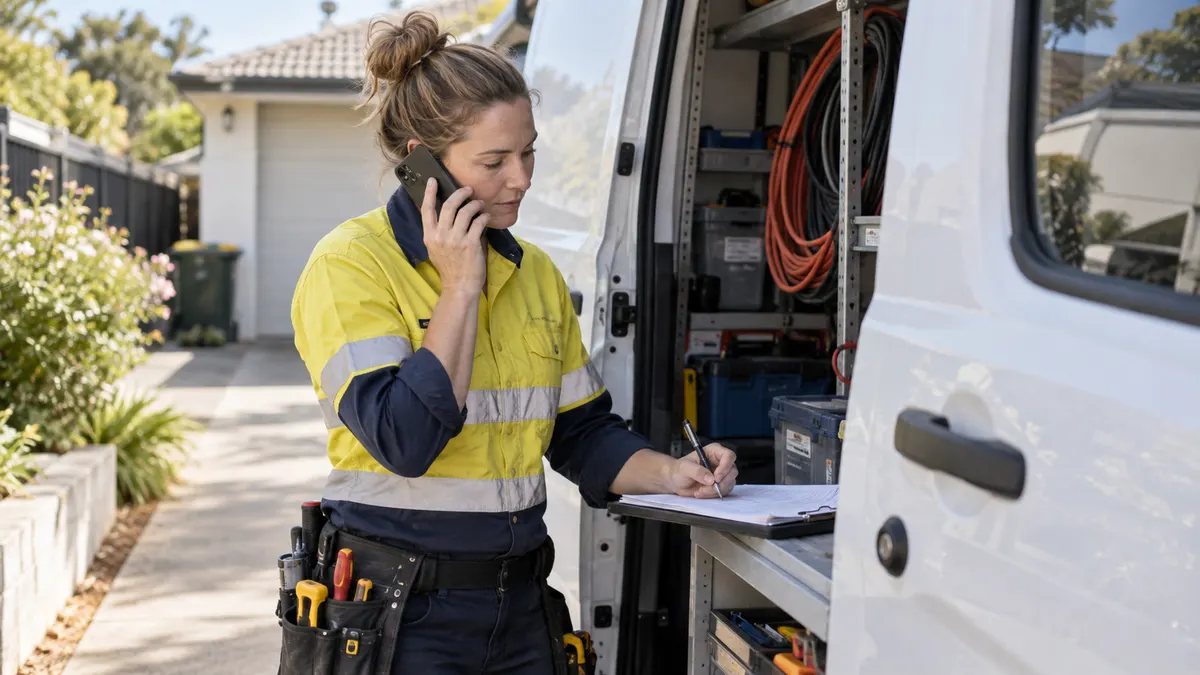
Practically, here's what a realistic Google Ads timeline looks like for a service business: week one is about verifying tracking is firing correctly and the right search terms are triggering your ads, this is also when you're most likely to catch a costly setup mistake, so it deserves close attention, not a "set and forget" launch. Weeks two to four bring the first real signal on cost per click and cost per lead, though volume is still building. By week six to eight, with consistent spend and no major changes in between, you should have enough conversion data to start confidently optimising, cutting what's not working, doubling down on what is.
If a Google Ads account has been live for two-plus months with consistent spend and still has no usable conversion data, that's a legitimate red flag, but it's almost always a conversion tracking problem, not a "Google Ads doesn't work for my industry" problem. Before assuming the channel has failed you, have someone audit whether your conversions are actually being counted correctly. It's one of the most common, and most fixable, issues we find when we review a new client's existing account.
How Long Does Social Media Marketing Take to Build Momentum?
Organic social media is the channel with the least direct correlation between effort and lead generation for most service businesses, and it's worth being upfront about that rather than overselling it.
Posting consistently for three to six months typically builds a genuine following and engagement pattern, people start recognising your brand, commenting, sharing locally relevant content. That's real value, but it's brand and trust-building value, not a lead-generation engine on its own. For most trades, health, property, finance and local professional service businesses, organic social's real job is to warm up an audience that later converts through search, referral, or a paid campaign, not to generate enquiries directly from a post.

If lead generation from social is the actual goal, paid social (Meta Ads in particular) compresses that timeline significantly, because you're not waiting for organic reach and algorithm favour, you're buying placement in front of a defined audience from day one. Even then, expect a similar 2-4 week settling-in period to Google Ads before you can trust the cost-per-lead numbers you're seeing.
What About Email Marketing and Marketing Automation?
Email and marketing automation are the exception to almost everything above: the infrastructure goes live fast, but its value compounds with time rather than arriving in a single "results" moment.
A welcome sequence, an abandoned-enquiry follow-up, or a simple nurture campaign can be built and switched on within one to two weeks. What takes longer is the list itself, and the behavioural data that makes automation genuinely smart, segmenting by what someone clicked, what service they enquired about, how long ago they last engaged. That maturity typically builds over 60 to 90 days as more contacts flow through your CRM. This is one of the highest-leverage, lowest-cost channels available to a small business precisely because the setup cost is front-loaded and the ongoing cost is close to zero, worth prioritising early even while you're waiting on SEO or Google Ads to mature.
Why Does Digital Marketing Take Longer Than Most Small Business Owners Expect?
Three reasons, and none of them are excuses, they're just how these systems genuinely work.
First, algorithms need real data before they can perform well, and that data only accumulates through real spend and real time in market. Google Ads' Smart Bidding, Google's organic ranking systems, and Meta's ad delivery all improve as they observe actual user behaviour against your specific offer, there's no way to fast-forward through that observation period.
Second, most competitive advantage in digital marketing is relative, not absolute. You're not being measured against some fixed bar, you're being measured against every other business chasing the same customer in the same market. If your competitors have been investing consistently for two years and you're three months in, you're not behind because your marketing is broken; you're behind because you started later, and that gap closes with consistent investment, not with switching agencies every quarter.
Third, and this is the one I see derail small business marketing most often, strategy-hopping resets the clock. Every time you change your core message, swap agencies, pause a campaign for two months then relaunch it differently, or chase a new "growth hack," you're not accelerating results, you're restarting the learning period that was already most of the way through building momentum. According to CPA Australia's Asia-Pacific Small Business Survey 2025-26, roughly 30% of small businesses that increased their technology and marketing investment reported improved profitability as a result, but that figure reflects sustained investment, not one campaign burst followed by a pivot.
What Should Your First 90 Days of Digital Marketing Actually Look Like?
Here's a realistic checklist for what "on track" looks like, broken down by 30-day block, so you know what to actually watch for.

Days 1-30: Tracking and analytics correctly configured, this is non-negotiable, without it, you cannot judge anything else on this list. Campaigns and content live. Website conversion paths (forms, click-to-call, booking links) tested and working. First directional data starting to come in, not conclusions yet, just confirmation that the machine is running correctly.
Days 31-60: Enough data to see early patterns, which keywords, audiences, or ad creative are performing above or below average. First optimisation round based on that data, not on gut feel. Early organic content should be indexed and starting to appear in search, even if not yet ranking well.
Days 61-90: Cost per lead should be stabilising into a range you can plan around, even if it's not yet at your target. SEO content should show the first signs of ranking movement for lower-competition terms. You should have enough data at this point to have an honest conversation with whoever runs your marketing about what's working, what isn't, and what the next quarter's priorities should be.
If you're 90 days in and none of this has happened, no working tracking, no data to point to, no clear plan for the next quarter, that's a legitimate reason to ask hard questions. If you're 90 days in and the answer is "it's tracking towards target but not there yet," that's usually exactly on schedule.
How Can You Get Faster Results Without Cutting Corners?
There genuinely are ways to compress this timeline, they just don't involve skipping steps.
Start with a tighter, better-defined target audience rather than a broad one; algorithms and organic content both perform faster when the signal is cleaner. Fix your conversion tracking before you spend a single dollar on ads, not after three months of wondering why the numbers don't add up. Prioritise one or two channels properly over spreading a small budget across five channels thinly, a well-funded Google Ads campaign plus solid local SEO will usually outperform five underfunded channels running at once. And treat your first 90 days as a controlled test, not a verdict: the data from that period should inform the next quarter's budget and channel mix, not trigger a full strategy reset at the first sign of a slow week.
If your budget itself is the open question, our guide on how much a small business should actually spend on digital marketing and what channels are worth using are worth reading alongside this one.
Frequently Asked Questions
How long before I see results from digital marketing?
For paid channels like Google Ads, expect meaningful, trustworthy data within 4-8 weeks. For organic channels like SEO, expect early movement in 3-6 months and compounding results in 6-12 months. Anyone promising faster, guaranteed results across the board should be treated with caution.
Is it normal to see no leads in the first month?
Yes, particularly for SEO and organic social. The first month should be focused on getting tracking, targeting and content genuinely right, not on lead volume. If tracking is confirmed correct and you're still seeing zero signal after 60 days on a paid channel, that's worth investigating.
Does switching agencies speed things up if I'm not seeing results fast enough?
Almost never, it usually resets the clock. Unless there's a clear, specific failure (broken tracking, no communication, no strategy), switching mid-campaign typically costs you the momentum already built rather than accelerating anything.
Why does SEO take longer than Google Ads?
Google Ads buys placement directly; SEO has to earn it through relevance, authority and trust signals that Google's algorithms build up over time by observing your site's content and how users interact with it. There's no equivalent of "paying for a faster ranking" in organic search.
Has AI search (AI Overviews, AI Mode, ChatGPT) changed how long SEO takes?
Not fundamentally. Being surfaced in an AI-generated answer still depends on the same underlying signals classic SEO rewards, clear, credible, well-structured content, so the realistic timeline hasn't shortened, even though the destination (an AI answer box rather than a blue link) has changed.
What's the single biggest thing that slows results down?
Under-investment relative to your market's competitiveness, and changing direction before a channel has had a fair run. Both are avoidable with a clear plan and a genuinely honest 90-day review rather than a nervous one at week three.
Ready for a Realistic Plan, Not a Rushed One?
If you want a digital marketing plan built around what will actually work for your business, with honest timelines instead of inflated promises, our Google Ads management and local SEO services are built to be transparent about exactly this from day one. Book a free strategy call and we'll walk you through what a realistic timeline looks like for your specific business and market.
Sources and References
- IAB Australia, Internet Advertising Revenue Report FY26, total internet ad spend $19.8 billion, +14.0% YoY, search advertising approximately 43% share (~$8.6bn), released 31 August 2026.
- CPA Australia, Asia-Pacific Small Business Survey 2025-26, Australia market summary, technology/marketing investment and profitability findings.
- Google Search Central, ongoing public guidance on how organic ranking changes take effect over time as a site's content, links and technical signals mature.
- Industry SEO timeline benchmarking (3-6 month initial results, 6-12 month meaningful revenue impact), consistent with widely cited 2026 SEO agency benchmarking.
- Google Ads Smart Bidding learning-phase and campaign-maturation guidance, including the shift toward a longer settling-in window under Performance Max, industry PPC agency benchmarking.